

In the accelerating landscape of generative AI, synthetic videos are reshaping content distribution, but they bring thorny challenges around provenance and monetization. Synthetic video watermarking emerges as a critical safeguard, embedding invisible signals that enable AI content royalty tracking through automated royalty rails. This technology doesn't merely detect deepfakes; it enforces licensing by tracing every clip's journey across platforms, ensuring creators capture value amid regulatory shifts and technological arms races.

Regulators worldwide are converging on mandates that make watermarking non-negotiable. The European Union's AI Act, set to enforce machine-readable labeling for AI-generated content from August 1,2026, signals a seismic shift. Organizations ignoring this risk fines and market exclusion. China's labeling laws already demand explicit and implicit markers on videos, audio, and images, pressuring global platforms to comply or face barriers. In the U. S. , California's safeguards and federal guidance from the Department of Commerce underscore watermarking for authentication, while debates rage over copyright ownership of AI outputs.
Imperceptible Markers: The Only Viable Defense Against Removal Tools
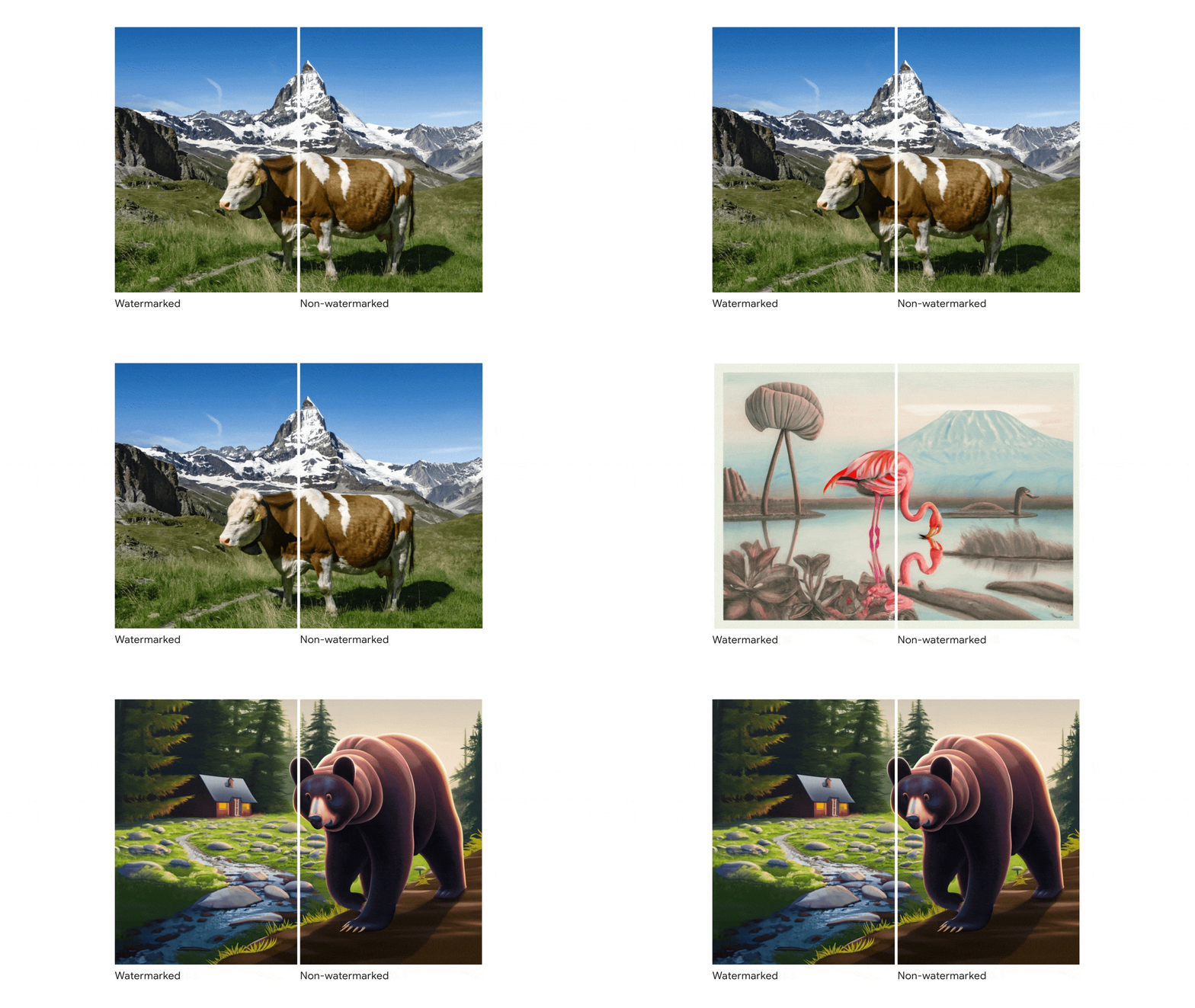
Visible watermarks, once a staple, crumble under AI-powered removal tools that erase them in seconds. This vulnerability undermines watermark licensing enforcement, leaving synthetic media exposed to unauthorized repurposing. Imperceptible watermarks, however, burrow into the pixel structure or frequency domain, surviving compression, cropping, and even adversarial edits. Tools like Google's SynthID now extend to videos, embedding robust signals that detectors verify with high fidelity.
Comparison of Visible vs. Imperceptible Watermarks in Synthetic Video Watermarking
| Aspect | Visible Watermarks | Imperceptible Watermarks |
|---|---|---|
| Visibility to Humans | Clearly visible (e.g., logos, text overlays) | Undetectable by the human eye |
| Ease of Removal | Easy via cropping, inpainting, or AI removal tools | Resistant; removal degrades video quality |
| Robustness to Edits | Poor; fails under cropping, resizing, compression | High; survives transformations (e.g., SynthID by Google DeepMind) |
| Viewer Experience Impact | Distracting; reduces aesthetic quality | Seamless; no visual interference |
| Machine Detectability | Possible if intact, but unreliable post-tampering | Reliable and robust for automated detection |
| Regulatory Compliance | Insufficient for machine-readable mandates (e.g., EU AI Act 2026) | Fully compliant; machine-readable formats required |
| Suitability for Royalty Rails | Ineffective; easy tampering disrupts tracking | Ideal; enables automated origin tracing and payments (e.g., Imatag, Resemble AI) |
From my vantage, skeptics who dismiss watermarking as unenforceable miss the point. Detectors attuned to these provenance signals, as outlined in research agendas from bodies like Australia's Department of Industry, Science and Resources, already trace content origins reliably. Platforms exposing copyrighted influences in AI images, such as Vermillio, hint at the precision possible for videos, fortifying deepfake video protection.
Automating Royalties: From Watermark to Payout
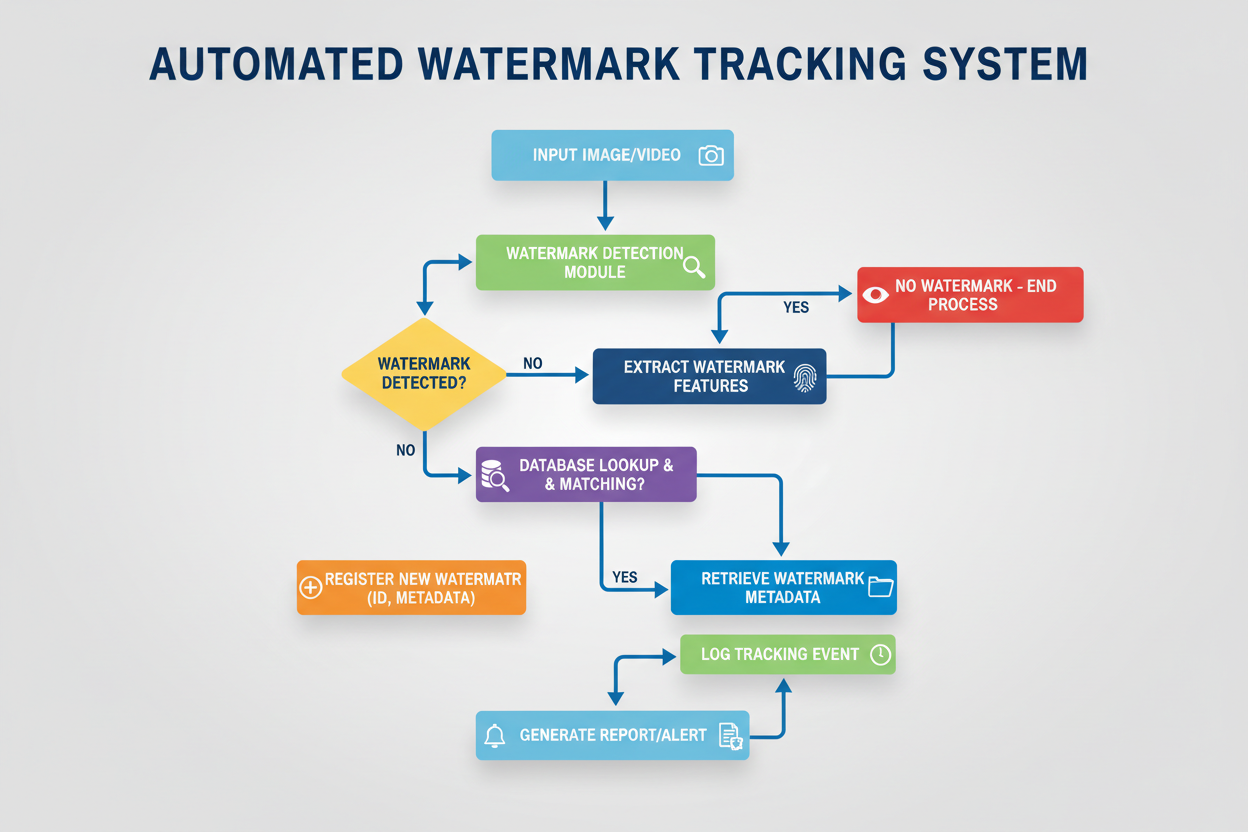
Watermarking transcends detection; it powers royalty rails AI video systems that automate payments. Embed a marker at creation, and smart contracts trigger royalties upon detection in licensed distributions. Imatag's API integrates this seamlessly, tracing videos at scale for efficient management. Resemble AI's persistent embeds prove origin while flagging misuse, aligning with mandates and streamlining enforcement.
Key Advantages of Imperceptible Watermarking
- Robust Detection: Survives common transformations and AI removal attempts, as demonstrated by Google's SynthID for synthetic video.
- Regulatory Compliance: Meets EU AI Act requirements for machine-readable marking of AI-generated content, effective August 2026.

- Automated Tracking: Enables provenance tracing for royalty rails, automating content origin verification and payments.
- Misuse Prevention: Proves synthetic origins with persistent markers, deterring unauthorized use as in Resemble AI solutions.

- Scalable Integration: Deploys via APIs like Imatag's for seamless workflow embedding at scale.
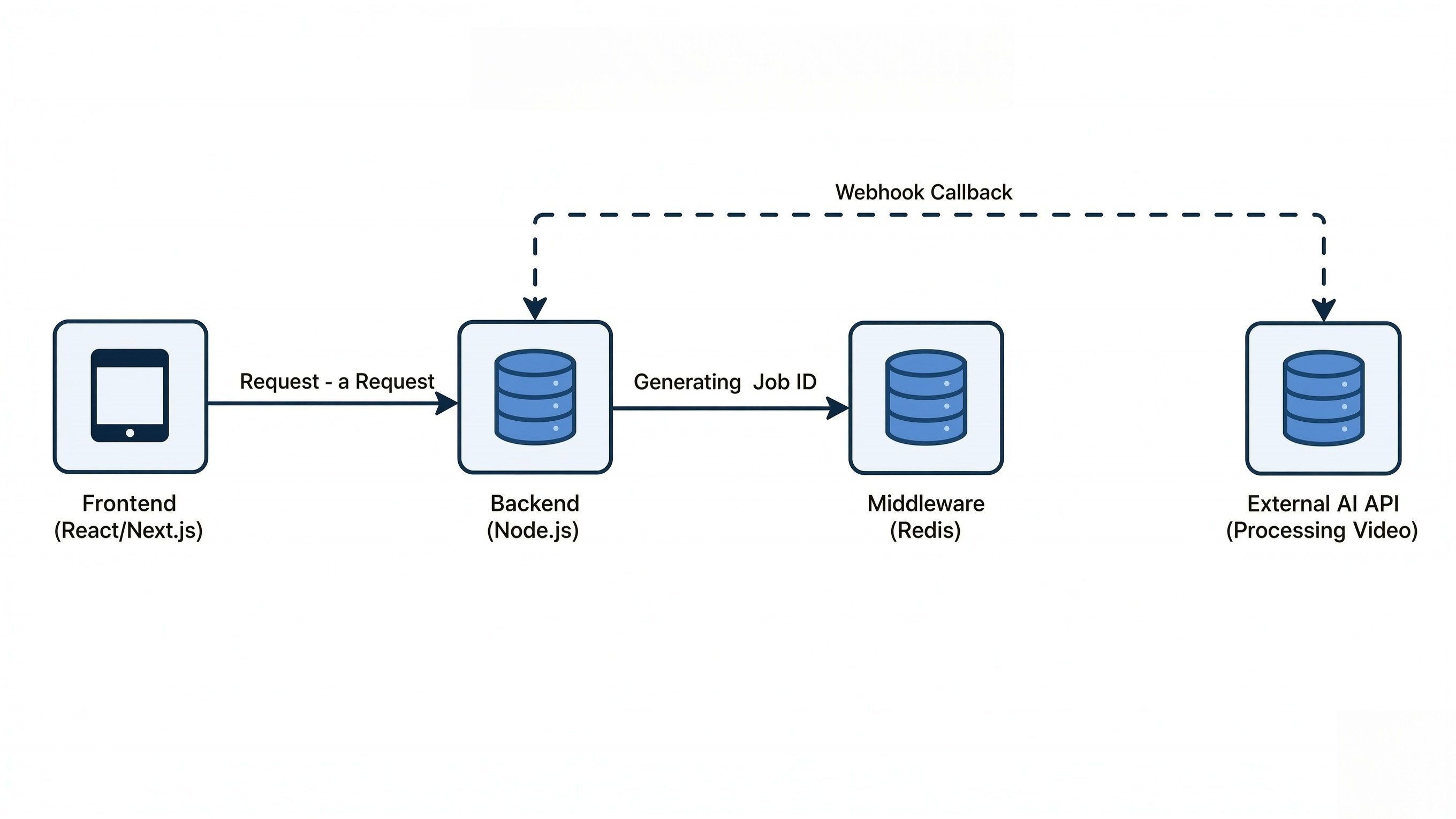
Consider the workflow: a creator generates a synthetic video, watermarks it imperceptibly, licenses it via a platform. As the clip proliferates, detectors scan uploads, verify the marker, and route micropayments through rails. This closes the loop on synthetic media licensing, where traditional agreements falter against viral, borderless distribution. Yet caution prevails; not all editing software will adopt watermarks universally, as Reddit debates highlight, demanding industry-wide standards.
Real-World Deployments Paving the Way
DeepMind's SynthID expansion to video exemplifies maturity, with markers enduring transformations like resizing or filtering. Paired with royalty systems, it transforms liability into opportunity, letting rights holders monetize derivatives legally. While some warn licensing requirements could stifle innovation, as U. S. Copyright Office drafts note, proactive watermarking sidesteps this by enabling opt-in tracking without broad mandates on training data.
These deployments aren't theoretical; they're scaling across media licensing pipelines. Imatag's API-driven watermarking slips into video workflows without friction, automating synthetic video watermarking at enterprise levels. Detection verifies origins instantly, feeding data into royalty rails that disburse payments based on usage metrics. Resemble AI pushes further, watermarking at generation to lock in provenance from the outset, a move that fortifies deepfake video protection against evolving threats.
Yet integration demands vigilance. Platforms must harmonize detectors with diverse formats, from 4K streams to social clips. My view: half-measures won't cut it. Watermarking must embed across the stack, from generator to distributor, or watermark licensing enforcement remains a pipe dream. Skeptics point to editing tools skirting labels, but standards bodies are closing gaps, much like digital rights management matured for music.
Challenges in Scaling Royalty Rails for Videos
Automated systems shine in theory, but video's complexity tests them. High-bitrate files strain detectors, and format conversions can degrade signals. Still, advancements like SynthID's resilience to filtering offer reassurance. The real hurdle lies in adoption: creators balk at added steps, platforms at liability. Here, incentives align via shared revenue; watermark-verified content commands premiums in licensing markets.
Comparison of Watermarking Solutions for Synthetic Videos in Royalty Rails
| Solution | Robustness | Integration | Royalty Support |
|---|---|---|---|
| SynthID (Google DeepMind) | High (imperceptible markers survive transformations) | API | Supports automated royalty systems |
| Imatag | High | Seamless API | Automated royalty management & content traceability |
| Resemble AI | Persistent (invisible watermarks) | At point of creation | Misuse tracking & automated royalty distribution |
Regulatory tailwinds accelerate this. The EU AI Act's machine-readable mandate, effective August 1,2026, compels platforms to scan uploads, creating a detection ecosystem ripe for AI content royalty tracking. China's rules already enforce labels globally, while U. S. guidance looms. Non-compliance? Expect deprioritization or bans, pushing even holdouts toward watermarking.
[tweet: Developer sharing success with Imatag API for automating royalties in synthetic video distribution]Opinion: this convergence favors early adopters. Media firms embedding markers now sidestep future scrambles, turning compliance into competitive edge. Take a studio licensing AI clips; watermarks enable granular tracking, splitting royalties by derivative use. No more opaque black boxes; transparency breeds trust and volume.
Future-Proofing Content Ecosystems
Looking ahead, watermarking evolves with AI. Multi-modal markers spanning video, audio, text will underpin hybrid content, where rails automate across modalities. Blockchain-anchored royalties add tamper-proof ledgers, verifying payouts without intermediaries. But caution tempers optimism: adversarial attacks persist, demanding iterative hardening. Research from government agendas stresses provenance detectors; invest there, and ecosystems thrive.
Platforms like those pioneering Vermillio-style tracing for videos will quantify influences, easing copyright frays. Creators gain tools to license derivatives, fostering a vibrant market unhindered by ownership fog. In this realm, royalty rails AI video isn't just tech; it's the ballast stabilizing generative floods. Those embedding imperceptibly today navigate tomorrow's mandates with authority, monetizing synthetic streams sustainably.




No comments yet. Be the first to share your thoughts!