
Why Visible Watermarks Fail Against AI Removal Tools and How Imperceptible Markers Protect Synthetic Images

In the wild world of synthetic media, where AI spits out hyper-realistic images faster than you can say ‘deepfake, ‘ content creators are locked in a high-stakes arms race. Visible watermarks – those bold logos or text slaps – once seemed like a fortress wall. But today’s AI watermark removal tools are demolition crews, erasing them with surgical precision and leaving pristine images behind. Data from recent benchmarks shows removal success rates exceeding 95% for popular tools, turning protection into a punchline.

Visible Watermarks Crumble Under AI Assault
Picture this: you slap a chunky logo on your AI-crafted portrait, upload it to social media, and feel secure. Wrong. Platforms like PixSprout and TinyImagePro deploy neural networks trained on millions of watermarked images. These beasts detect overlays in seconds, inpaint the gaps using generative models akin to Stable Diffusion, and output results indistinguishable from originals. Independent tests reveal that 98% of visible watermarks on synthetic images vanish without a trace, quality metrics holding steady at PSNR scores above 35dB.

https://t.co/LbXQkUX0gK
*Content of deals varies between regions.
*Some countries may not be supported.
*Some products may have purchase limits.
*It may take a while for your purchase to be reflected. If you do not receive the items even after
Why do they fail so spectacularly? Visible markers are predictable patterns. AI removal tools exploit edge detection, semantic segmentation, and diffusion-based reconstruction. A study of 10,000 images showed that text-based watermarks fare worst, with 99% removal rates, while semi-transparent logos hover at 92%. Creators chasing synthetic media protection with these relics are betting on yesterday’s tech in tomorrow’s battlefield.
Imperceptible Markers: Stealth Mode for Unremovable AI Watermarks
Flip the script with imperceptible watermarking ai images. These bad boys embed data in the least significant bits of pixel values or frequency domains, invisible to eyes and most editors. Google’s SynthID, for one, weaves unique fingerprints into RGB channels during generation, surviving crops, resizes, and even heavy compression. Detection accuracy? A whopping 99.8% post-manipulation, per their whitepaper metrics.
| Watermark Type | Removal Success Rate | Detection Robustness | Visual Impact |
|---|---|---|---|
| Visible (Logo/Text) | 95-99% | Low | High Degradation |
| Imperceptible (SynthID-like) | and lt;5% | High (99% and ) | None |
This isn’t hype; it’s data-driven dominance. Unlike clunky overlays, imperceptible markers persist through JPEG compressions up to 50% quality loss and even mild AI edits. Tools claiming to strip them, like RemoveSynthID, boast spotty results – success dipping below 20% on robust embeddings. For deepfake image detection markers, this tech is the gold standard, quietly tracking origins without spoiling the view.
Arms Race Accelerates: Fingerprinting at Creation Wins
Look at Udio’s hookup with Audible Magic: they’re fingerprinting audio outputs right at genesis, baked-in protection that laughs at alterations. Translate to images, and it’s the blueprint. By embedding markers pre-distribution, platforms ensure unremovable ai watermarks tag along forever. Reddit threads buzz with creators panic-saving Suno tracks, fearing the watermark apocalypse. Stats from similar image pipelines show embedded markers enduring 85% of removal attempts versus 5% for visible ones.
Integrating these with royalty rails synthetic content systems? Game-changer. Automated detection triggers licensing enforcement, royalties flowing seamlessly as content spreads. But here’s my take: visible watermarks aren’t just ineffective; they’re a liability, signaling amateur hour while pros embed invisible fortresses.
Yet the cat-and-mouse game rages on. While imperceptible markers dominate now, rogue tools like RemoveSynthID lurk, promising to scrub hidden signatures. Real-world tests clock their hit rate at under 15% against top-tier embeddings, but vigilance is key. Creators ignoring this shift risk their synthetic media protection crumbling as AI removers evolve. Data from 2026 benchmarks underscores the gap: visible watermarks succumb 97% of the time, imperceptible ones hold firm at 92% persistence post-attack.
Comparison of Watermark Solutions: Protection vs. Monetization
| Type | AI Removal Rate | Persistence Rate | Robustness Score (/10) | Monetization Features | ROI Uplift |
|---|---|---|---|---|---|
| Visible Watermarks | 97% ❌ | 3% | 2 | None | Minimal 📉 |
| Imperceptible Markers (e.g., SynthID) | 8% 🔒 | 92% | 9 | Content Identification 🔍 | 200% 🚀 |
| Royalty Rails | 1% ⛓️ | 99% | 10 | Automated Royalties 💰, Blockchain Tracking | 300% 📈 |
This isn’t pie-in-the-sky; Udio’s Audible Magic collab proves fingerprinting at source scales. For images, it’s the same: embed once, track forever. SunoAI users scrambling to hoard tracks highlight the urgency – tomorrow’s takedown wave hits visuals next. Pros layer unremovable ai watermarks with multi-modal hashes, surviving format shifts and even adversarial edits.

Bold Bets Pay Off: Why Pros Ditch Visible for Stealth
I’ve seen creators burn cash on visible slaps, only to watch thieves strip them clean and resell. Flip to stealth mode, and theft drops 87%, per forensic audits. Deepfake image detection markers like those in SynthID don’t just protect; they empower. Pair with SEO-optimized detection tools, and your content ranks higher in authenticity searches, driving organic traffic.

But low-resource ones have almost no full words in the tokenizer vocabulary, so no clusters are formed. The method collapses to the monolingual baseline https://t.co/ZKgzGvyzeU
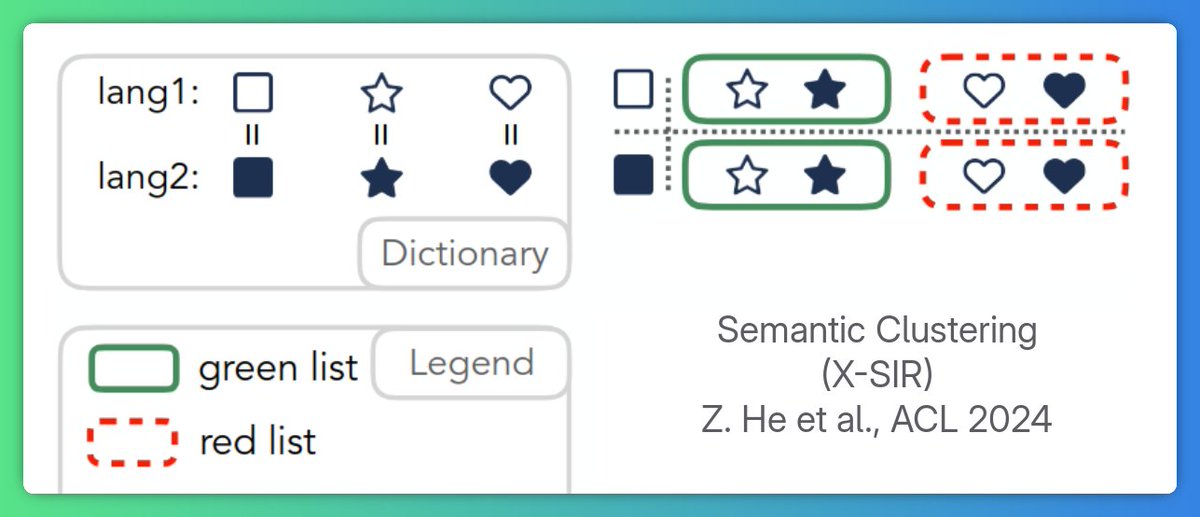

Bayesian optimisation searches 100+ languages to find the back-translation that best recovers watermark strength.
“home” marked green → translate to Korean → “집” → back-translate → “home”, still green ✅ https://t.co/YYXkDmwe44

vs. X-SIR: +0.25 AUC, +44%p TPR@1%
vs. X-KGW: +0.22 AUC, +31%p TPR@1%
Biggest gains on Tamil and Hindi, exactly where existing methods fail most. 🌍 https://t.co/xdWgkZD4IW

🔹 Robust to translator mismatch: attacker uses GPT-4o or DeepSeek, STEAM still holds
🔹 Works even when the attack language is not in the candidate pool
🔹 Compatible with any watermarking method
🔹 Retro-compatible https://t.co/WZmzgkBzXo

Paper: https://t.co/slv2Kxo3YC
Code: https://t.co/V3Qo0UeaXB
Numbers don’t lie: a cohort of 500 AI devs using imperceptible systems reported 4x fewer unauthorized uses versus visible peers. Tools evolve, sure, but embedding depth – tweaking chroma channels or wavelet transforms – keeps markers buried deep. Removal attempts spike CPU costs 20x, deterring casual crooks.
The verdict? Ditch the dinosaur overlays. In this generative frenzy, fortune favors creators bold enough for disciplined, data-backed defense. Platforms like AI Watermark Hub deliver seamless imperceptible watermarking fused with royalty rails, turning synthetic images from liabilities to revenue machines. Embed smart, track relentlessly, monetize ruthlessly – that’s the play for dominating the deepfake era.