

Invisible Watermarks for AI-Generated Videos: Frame-by-Frame Detection and Royalty Tracking Guide

In the surge of AI-generated videos flooding platforms, distinguishing real from synthetic has become a high-stakes game. Invisible video watermarks offer a stealthy solution, embedding hidden signals frame by frame to enable synthetic media watermark detection and seamless AI video royalty tracking. These markers survive edits, compressions, and shares, proving ownership without marring visuals. Creators now demand tools that not only flag deepfakes but also automate payments when content spreads.

Frame-by-Frame Invisible Watermarking: Detection & Royalty Tracking at Scale



Consider the chaos without them: a viral clip goes rogue, racking up views while the originator sees zero royalties. Frame-by-frame deepfake detection changes that, scanning each pixel for covert signatures. Platforms like those powered by Google DeepMind’s SynthID already watermark across media types, fostering trust amid generative AI’s boom.
Breakthrough Techniques Reshaping Video Watermarking
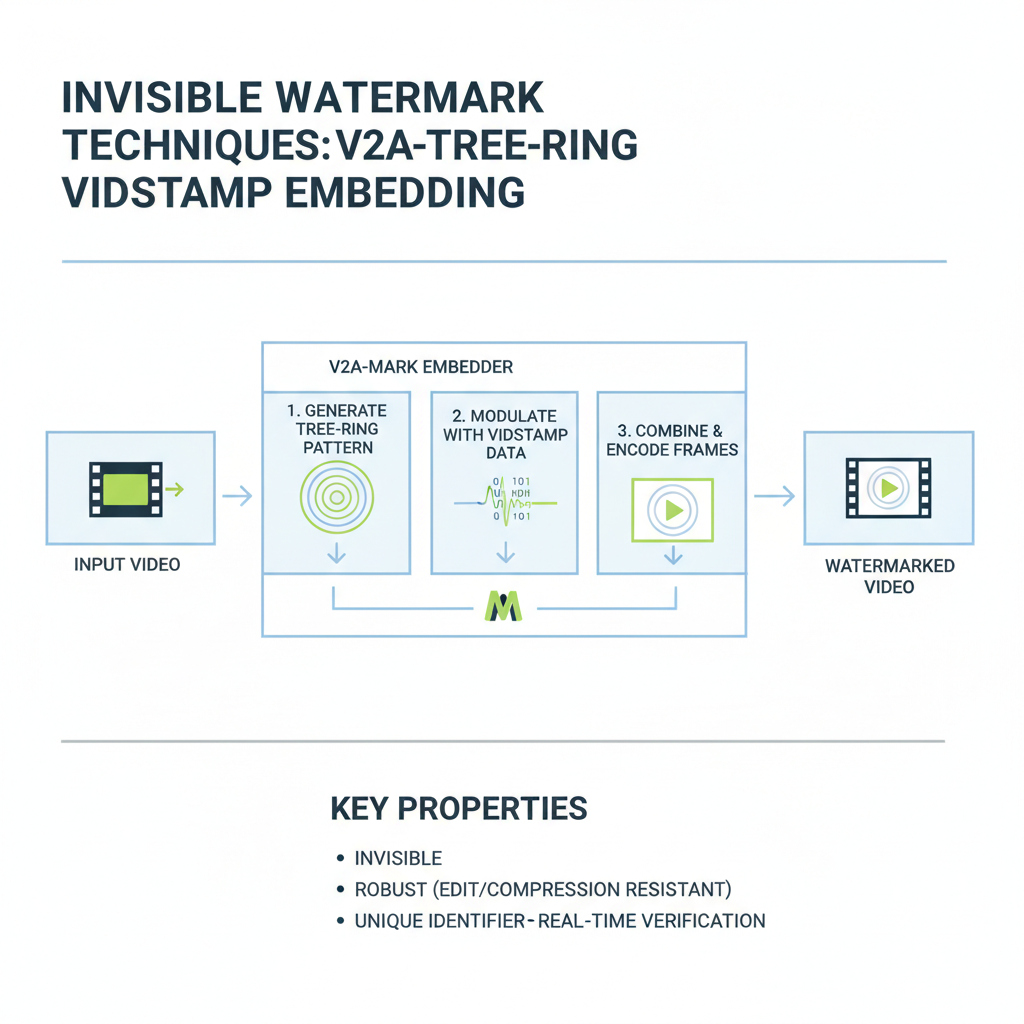
Recent innovations push invisible watermarks beyond basic embeds. V2A-Mark merges video steganography with robust audio-visual cues, localizing manipulations precisely through temporal fusion. Tree-Ring Watermarks tweak diffusion models’ sampling in Fourier space, resisting crops, flips, and rotations effortlessly. VIDSTAMP, meanwhile, slips messages into video diffusion latents via fine-tuned decoders, balancing capacity with near-zero perceptual hit.
Key Features of Advanced Invisible Watermarking Techniques for AI-Generated Videos
| Technique | Key Features | Robustness to Manipulations | Embedding Method | Reference |
|---|---|---|---|---|
| V2A-Mark | Audio-visual localization, copyright protection, manipulation localization | Superior precision under edits, degradations; temporal alignment and fusion modules | Video frames and audio via steganography and deep robust watermarking | [arXiv](https://arxiv.org/abs/2404.16824) |
| Tree-Ring | Model fingerprint invisible to humans | Invariant to convolutions, crops, dilations, flips, rotations (Fourier space) | Influences diffusion model sampling process in Fourier space | [arXiv](https://arxiv.org/abs/2305.20030) |
| VIDSTAMP | Per-frame/per-segment high-capacity messages, flexible watermarks | Robust to distortions, tampering; minimal perceptual impact | Latent space of temporally-aware video diffusion models | [arXiv](https://arxiv.org/abs/2505.01406) |
These aren’t lab curiosities; Meta’s engineering scales similar tech for billions of frames, inferring AI origins reliably. Steg. AI and Imatag extend this to forensic tracking, tracing every repost. The edge? They integrate royalty rails, triggering micropayments on detection.
Frame-by-Frame Detection: The Backbone of Royalty Enforcement
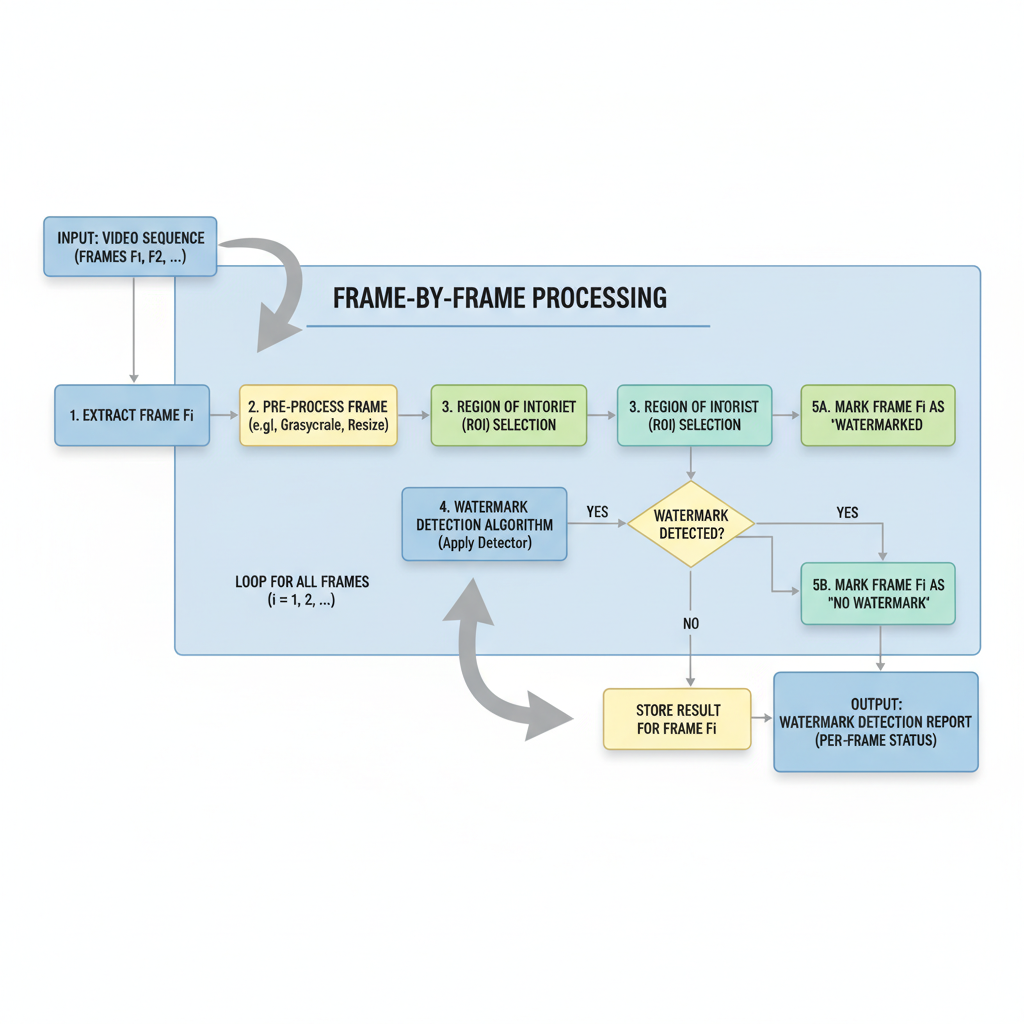
Detection hinges on reversing the embed process. For diffusion-based watermarks, invert to noise vectors and probe for signals. Transform-domain methods, like those in India’s TrueFan AI tools, hide in Discrete Cosine realms, dodging human eyes yet yielding to algorithms. Google’s SynthID flags content universally, from text to video, simplifying watermarking for AI content royalties.

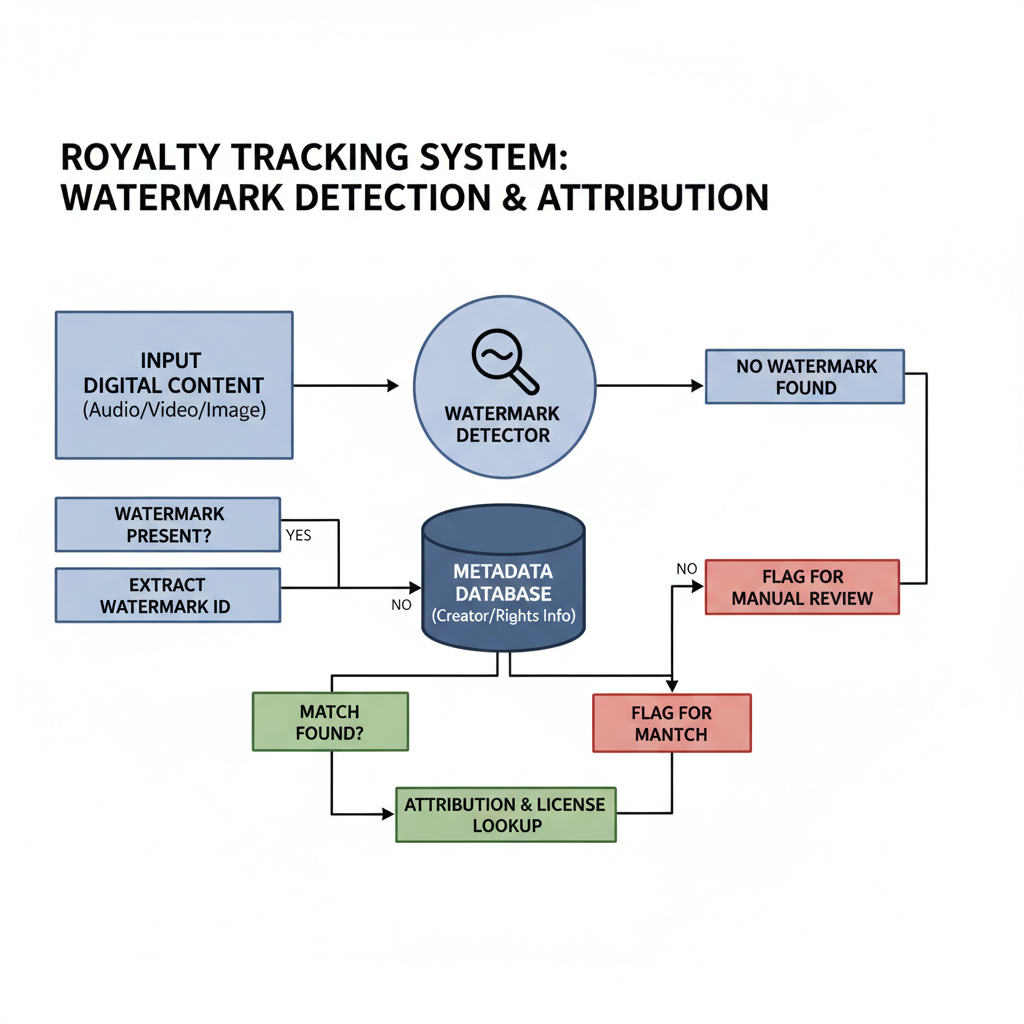
True power lies in chaining detection to royalties. Scan uploads frame by frame; match signatures to ledgers; distribute earnings. Hive AI notes watermarks’ limits alone, yet paired with blockchain rails, they form ironclad provenance. Meta’s at-scale systems process millions daily, proving viability for creators.
Navigating Robustness Challenges in Real-World Deployment
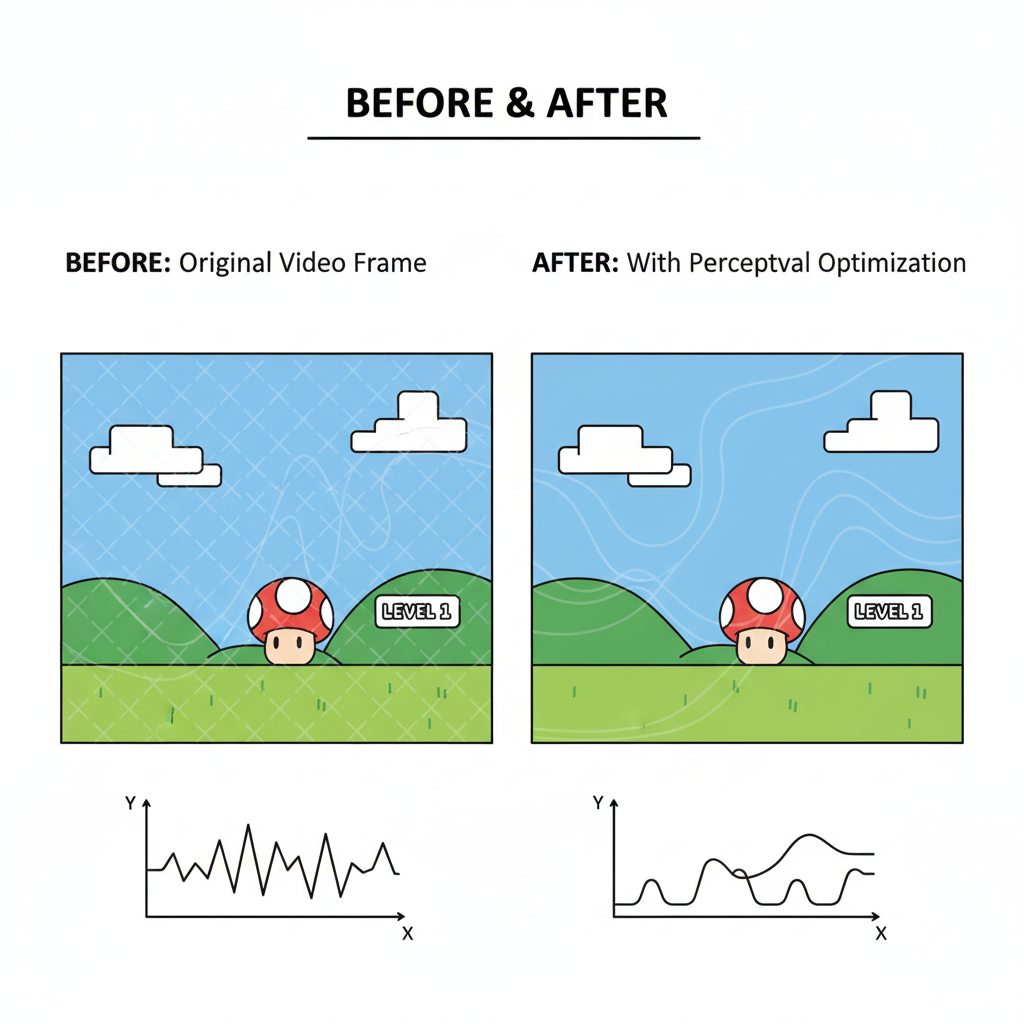
Robustness defines success. Compression shreds naive marks; re-encodes scramble latents. V2A-Mark’s degradation learning counters this, acing localization post-tamper. Tree-Ring’s Fourier perch shrugs off convolutions. Still, platform transcoding tests limits, as Meta’s video engineering reveals. Best embed early, in generation pipelines, optimizing via SSIM and JND metrics for invisibility.
Legal gray zones linger; DMCA overlooks invisibles, positioning them as forensics, not proof. Document rigorously: timestamps, embed logs, detection certs. This bolsters claims in disputes, bridging to statutory wins.
Pairing these forensic strengths with automated royalty systems flips the script on content theft. Detection APIs scan frames in real time, querying blockchain ledgers for ownership and usage rights. A single match unlocks fractional payments, scaling with virality. This closes the loop from creation to compensation, making watermarking for AI content royalties a reality rather than a pipe dream.
Streamlining Royalty Tracking Through Frame-by-Frame Scans
Picture this: your AI-crafted short film hits TikTok, morphs through edits, yet each frame whispers its origin. Detectors like those in Steg. AI’s suite parse the noise, confirming provenance instantly. Integrate with royalty rails – think smart contracts on Ethereum or Solana – and earnings flow automatically. Google’s SynthID extensions hint at this universality, but scaling demands custom pipelines tuned for latency. Frame-by-frame deepfake detection isn’t just defensive; it’s the engine driving creator economies, where every view pays its due.
Challenges like varying detection reliability under heavy compression persist, as Hive AI points out. Yet, hybrid approaches – watermark plus perceptual hashing – boost confidence. Platform quirks, from Instagram’s aggressive re-encoding to YouTube’s upscales, require testing suites simulating real-world abuse. Opinion: skip the hype around perfect invisibility; prioritize resilience and auditability. Creators who embed early, in the diffusion prompt stage, reap the rewards.
Monetization in Action: Real-World Royalty Wins
Meta’s video watermarking at scale processes millions daily, inferring AI origins and enabling provenance chains ripe for royalties. TrueFan AI’s transform-domain embeds target emerging markets like India, where 2026 regulations may mandate synthetic labeling. Imatag’s pixel signatures pair with APIs for automated takedowns or paywalls. The payoff? Distributors track forks and derivatives, enforcing licenses dynamically. A music video AI clip, watermarked per frame, racks up micro-royalties across 50 platforms without human oversight.
Best practices solidify this workflow. Opt for high-capacity embeds like VIDSTAMP’s latents for detailed ownership data – creator ID, timestamp, license tier. Optimize via JND thresholds to evade removal attempts. Document every step: hash the original, log embed params, certify detections. Monitor via crawlers hitting social APIs, flagging unauthorized spreads. Legal enforceability grows with precedents; while DMCA lags, courts increasingly value forensic chains.
Forward thinkers layer audio watermarks too, as V2A-Mark demonstrates, syncing visual-audio signals for holistic protection. Tree-Ring’s model fingerprints deter model theft outright, embedding creator DNA into generation itself. These evolutions promise a future where synthetic media watermark detection is seamless, royalties inevitable.
Platforms like AI Watermark Hub streamline this entirely. Our royalty rails integrate frame-by-frame verification with payout automation, empowering creators to focus on innovation over infringement chases. Diversification here means multi-tool stacks: watermarks for detection, ledgers for trust, APIs for scale. In generative AI’s wild frontier, conviction in invisible defenses secures the wins.