

Robust Invisible Watermarks for AI-Generated Videos That Resist Removal and Enable Royalty Tracking

In the flood of AI-generated videos reshaping social media and entertainment, distinguishing real from synthetic has never been harder. Deepfakes slip through cracks, eroding trust and opening doors to misinformation. Enter robust invisible watermarks for AI-generated videos: subtle signatures woven into pixels and audio that resist tampering while paving the way for seamless royalty tracking. These aren’t gimmicks; they’re pragmatic shields for creators in a world where content theft is just a prompt away.

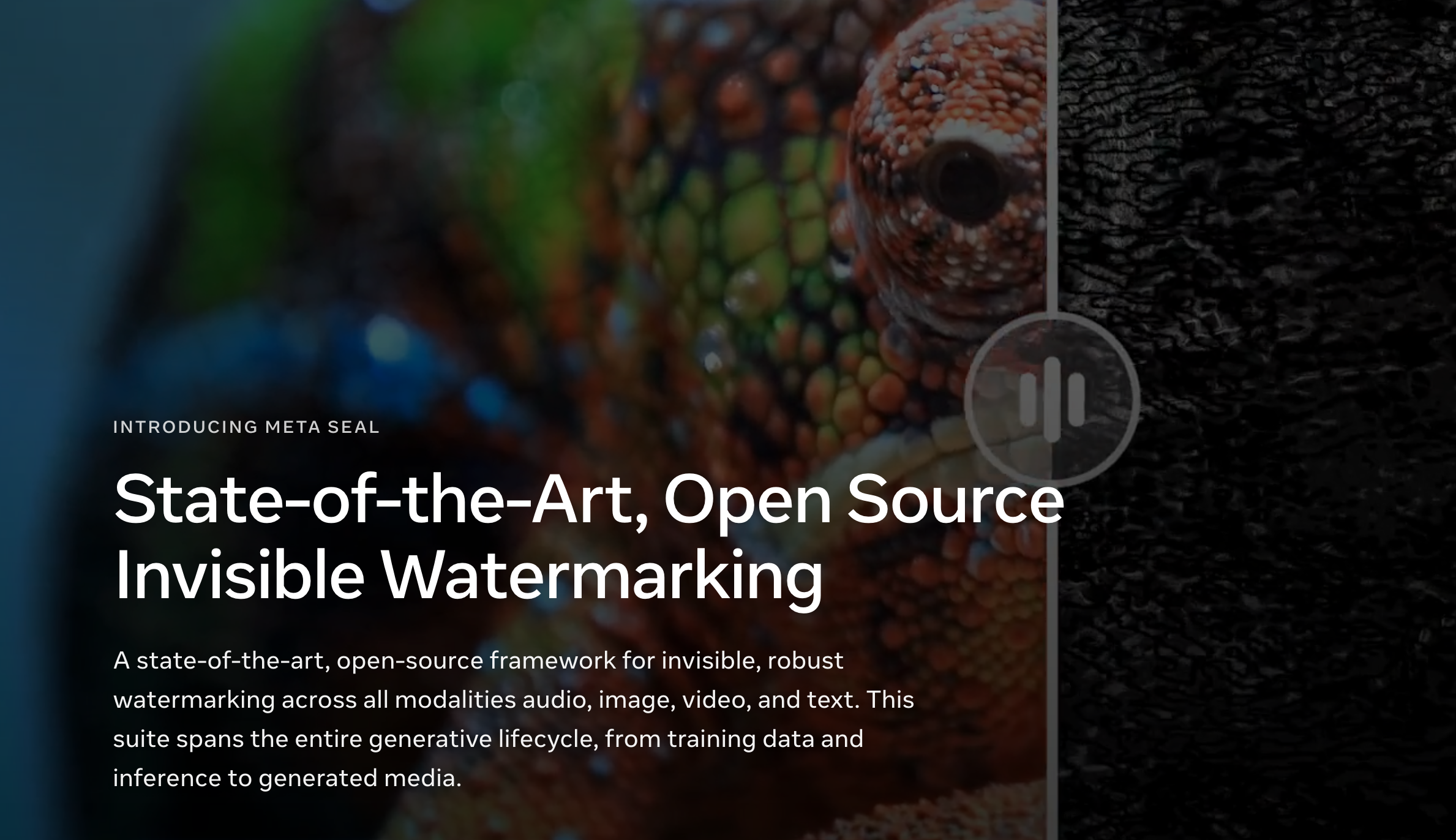
Traditional visible watermarks, those semi-transparent logos plastered across corners, crumble under modern AI tools. A quick crop, inpaint, or diffusion model edit strips them clean. Even early invisible watermarks, embedded post-generation, falter against sophisticated removal attacks. Researchers at the University of Maryland tested prominent schemes and shattered them all, exposing vulnerabilities to compression, resizing, and adversarial tweaks. The National Institutes of Health detailed a black-box remover needing no prior data, underscoring the arms race. For synthetic video watermarking royalties to work, we need defenses that endure real-world abuse, not lab perfection.
Why Post-Processing Watermarks Fall Short Against AI Removers
Post-generation embedding treats watermarks as afterthoughts, layered atop finished videos. This fragility invites exploits. Tools like those from Emergent Mind or GitHub’s Awesome-GenAI-Watermarking repo reveal how neural decoders pick apart these signals. Imatag’s image-focused invisible watermarks detect via hidden signatures, yet video’s temporal layers add chaos: frame drops, speed changes, or audio sync shifts obliterate them. The pragmatic truth? These methods suit static images but choke on dynamic videos. Robust AI watermark removal prevention demands integration at the source, making the mark inseparable from the media itself.
Key Watermarking Challenges
-

Vulnerability to compression and resizing: Watermarks degrade or vanish during standard video processing like compression (e.g., H.264) or resizing, as seen in tests breaking AI watermarks (Emergent Mind).
-
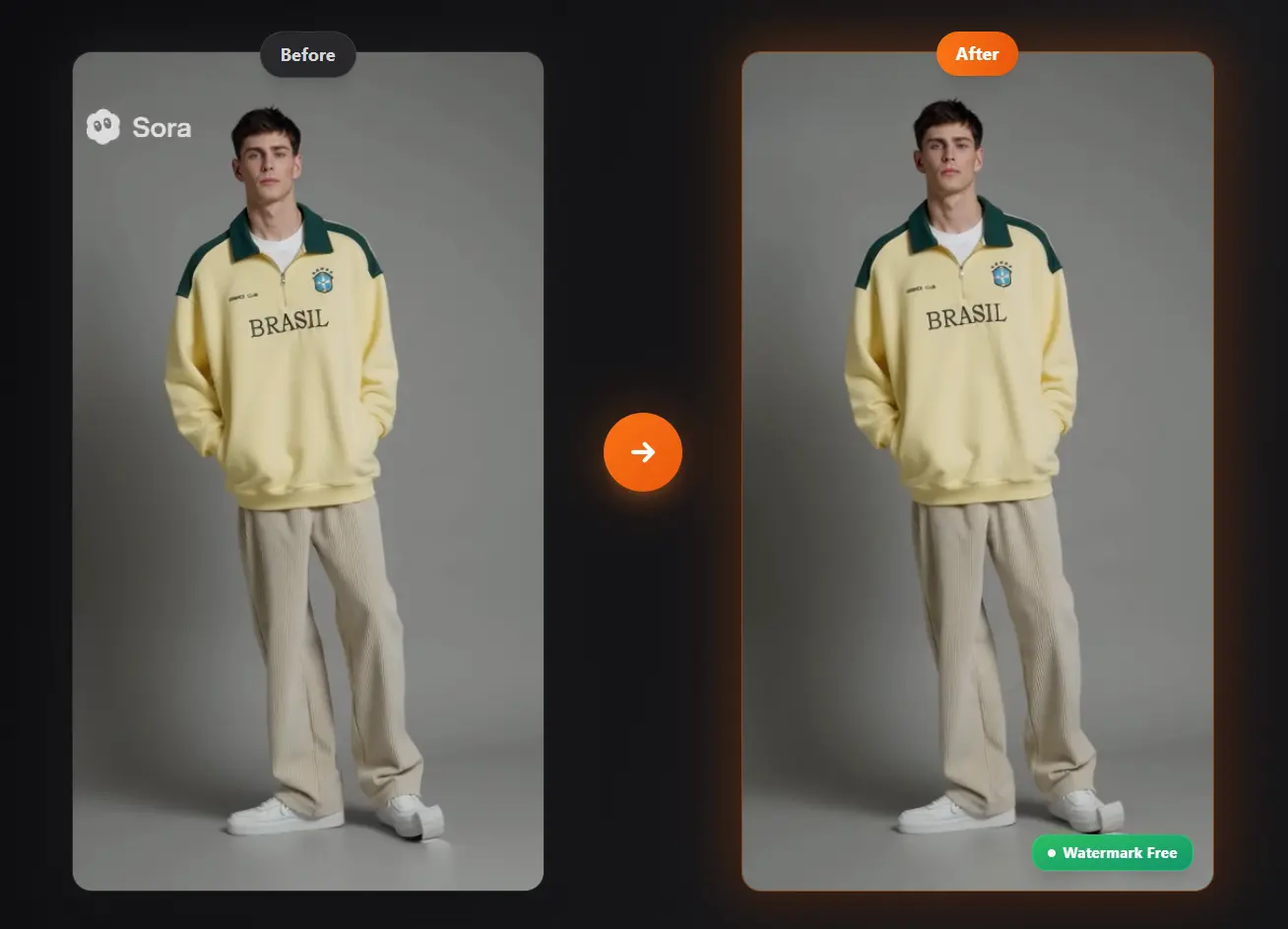
Susceptibility to AI-based inpainting: Advanced AI tools like those from University of Maryland research remove invisible watermarks via inpainting without datasets or prior knowledge (arXiv).
-
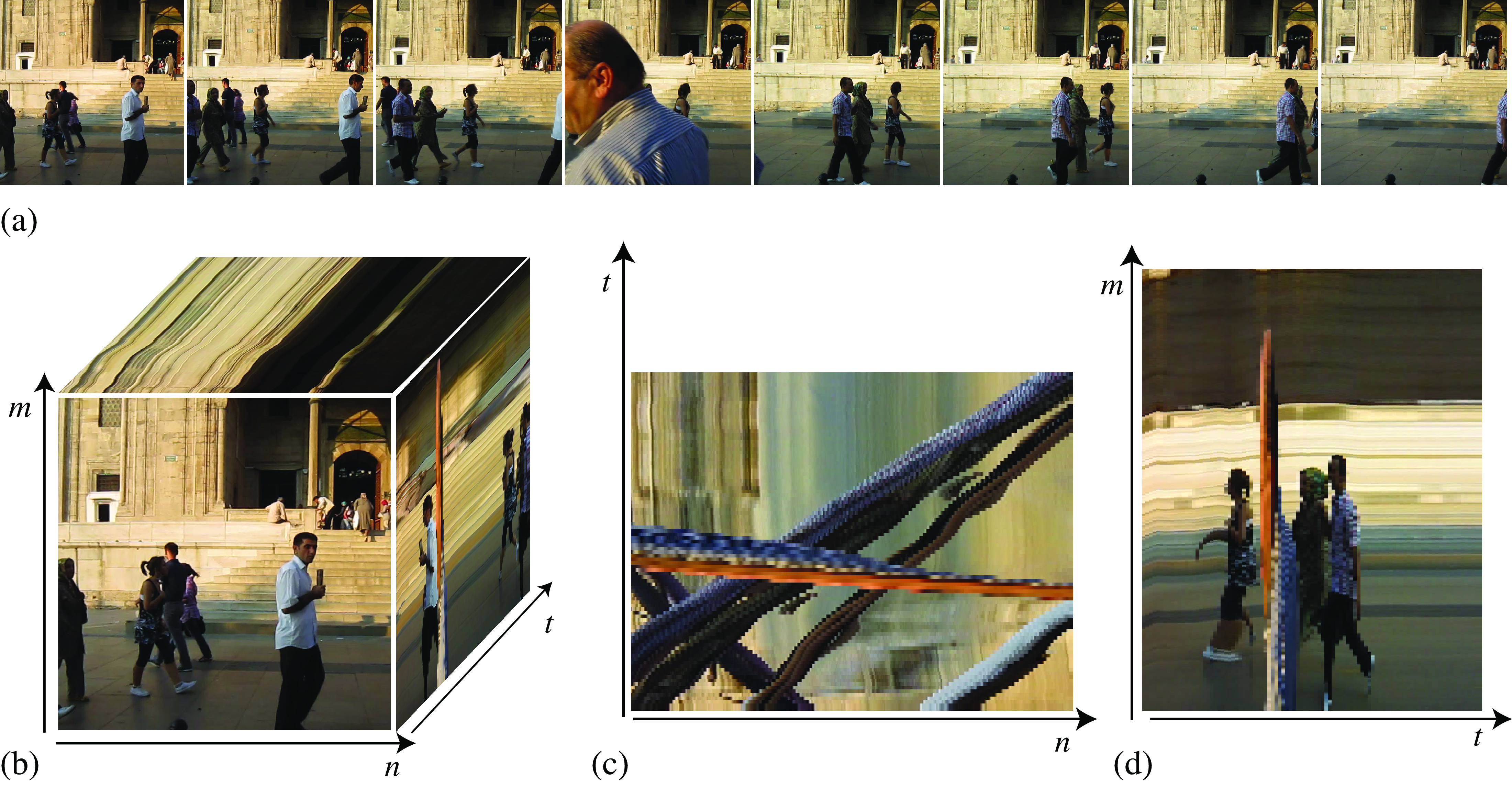
Failure under temporal video edits: Changes in frame rate or frame dropping disrupt watermark detection, especially in diffusion model videos lacking temporal robustness.
-
Limited scalability for long-form content: Embedding and extracting watermarks in extended videos is computationally intensive, hindering practical use for hours-long content.
-

Inadequate royalty tracking without persistent IDs: Current methods lack unique, tamper-proof identifiers for tracking usage and royalties across platforms.
InvisMark pushes boundaries with neural architectures trained for imperceptibility and grit, surviving aggressive distortions. Still, scalability lags for hour-long clips, and extraction demands compute-heavy verification. Creators lose out when watermarks vanish mid-distribution chain, halting royalty rails.

In-Generation Watermarking: Embedding Resilience from the Pixel Up
Shift to in-generation watermarking flips the script. Techniques like SIGMark infuse markers during video diffusion, binding them to the generative process. No add-on; the watermark lives in the content’s DNA, shrugging off edits that would gut surface-level embeds. This deepfake proof watermark technique scales across models, with blind extraction pulling royalties data sans original files. Pragmatically, it’s a game-changer for platforms: auto-detect syndicated clips, enforce licenses, collect dues via integrated rails.
V2A-Mark extends this to audio-visual synergy, stamping frames and soundtracks alike. Manipulate one, and the other flags foul play. Against temporal disturbances, it holds firm, ideal for synthetic video watermarking royalties in streaming wars.
Adversarial Fortifications and Blockchain Rails for Ironclad Tracking
Adversarial watermarks layer perturbations that fool removal nets, blending visibility cues with invisible payloads. ScienceDirect’s approach minimizes distortion while maximizing resistance, a balanced pragmatism creators crave. Pair this with blockchain-enhanced schemes: cryptographic hashes timestamped on-chain form watermark DNA. Smart contracts trigger takedowns or payouts, turning AI content royalty rails integration into reality. ReelMind. ai envisions automated flows where views convert to verified revenue, tamper-proof and global.
Yet implementation hurdles persist. Embedding these watermarks requires model access during training or fine-tuning, a barrier for off-the-shelf generators. Creators juggling Stable Video Diffusion or RunwayML need plug-and-play solutions, not PhD-level tweaks. That’s where platforms like AI Watermark Hub shine, offering invisible watermark ai video tools that retrofit in-generation logic without code dives. Pragmatically, this democratizes deepfake proof watermark techniques, letting indie filmmakers tag outputs for downstream royalties.
Real-World Robustness: Metrics That Matter for Royalty Rails
Robustness isn’t abstract; it’s measured in survival rates post-attack. InvisMark boasts 95% detection under Gaussian noise and JPEG compression at 50% quality, per arXiv benchmarks. SIGMark elevates this for videos, retaining 92% bit accuracy after 30% frame drops or speed ramps. V2A-Mark’s dual-track embedding hits 97% localization precision against cropping or re-encoding. These aren’t cherry-picked; they’re averages across COCO-Stuff datasets extended to Kinetics clips. For synthetic video watermarking royalties, such grit means persistent IDs that trigger micropayments on platforms like YouTube or TikTok syndication.
Comparison of Watermark Techniques
| Method | Robustness to Removal (%) | Royalty Features | Video Support |
|---|---|---|---|
| InvisMark | 95% | Basic Tracking | Images |
| SIGMark | 92% | Blind Extraction | Full Video |
| V2A-Mark | 97% | Audio-Visual Sync | Videos |
| Adversarial | 88% | Anti-Removal Nets | Videos |
These metrics cut through hype. A watermark fading at 70% compression? Useless for Netflix rips. Platforms must prioritize robust ai watermark removal prevention, baking in multi-attack training from day one. Opinion: Skip half-measures; bet on hybrids fusing neural embeds with blockchain proofs for unassailable chains.
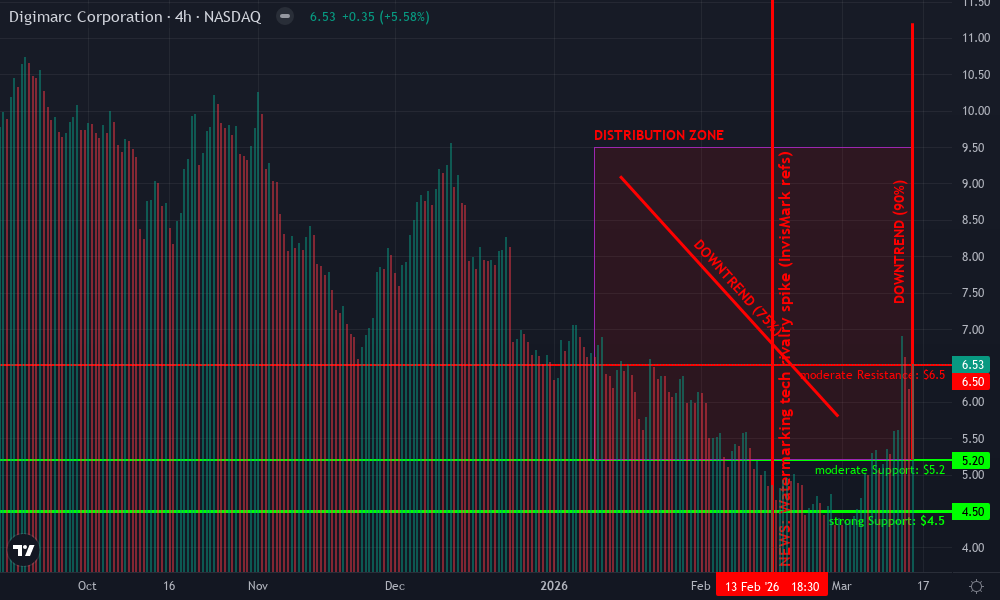
Digimarc Corporation Technical Analysis Chart
Analysis by William Garcia | Symbol: NASDAQ:DMRC | Interval: 4h | Drawings: 7
Technical Analysis Summary
As William Garcia, draw the dominant downtrend line connecting the swing high in early December 2026 at ~$11.20 to the recent low near March 17, 2026 at ~$5.20, using ‘trend_line’ for the bearish channel. Add horizontal lines at key support $4.50 (strong) and resistance $6.50 (moderate). Use fib_retracement from the major low to high for 38.2% ($7.20) and 61.8% ($8.80) retracement levels. Mark volume spikes on declines with ‘callout’ and ‘arrow_mark_down’. Rectangle the distribution range from mid-January to now. Place ‘short_position’ entry near $6.00 resistance with stop above $6.80 and target $4.50. Vertical line for potential news event mid-February. Text notes for MACD bearish signal.
Risk Assessment: medium
Analysis: Clear downtrend with volume bias but oversold extremes risk snapback; DMRC volatility suits options but needs confirmation
William Garcia’s Recommendation: Initiate short puts on $6.00 rejection, 1:2 RR min, trail stops—leverage wisely amid AI watermark arms race.
Key Support & Resistance Levels
📈 Support Levels:
-
$4.5 – Multi-test low with volume base
strong -
$5.2 – Recent swing low
moderate
📉 Resistance Levels:
-
$6.5 – Failed retest high
moderate -
$8 – Prior consolidation ceiling
weak
Trading Zones (medium risk tolerance)
🎯 Entry Zones:
-
$6 – Short entry on resistance rejection with bearish candle
medium risk -
$5.5 – Aggressive entry on breakdown confirmation
high risk
🚪 Exit Zones:
-
$4.5 – Strong support confluence
💰 profit target -
$6.8 – Invalidation above channel
🛡️ stop loss
Technical Indicators Analysis
📊 Volume Analysis:
Pattern: Climactic selling on declines
Red volume bars dwarfing ups, confirming distribution
📈 MACD Analysis:
Signal: Bearish crossover and divergence
MACD histogram contracting negative, line below signal
Applied TradingView Drawing Utilities
This chart analysis utilizes the following professional drawing tools:
Disclaimer: This technical analysis by William Garcia is for educational purposes only and should not be considered as financial advice.
Trading involves risk, and you should always do your own research before making investment decisions.
Past performance does not guarantee future results. The analysis reflects the author’s personal methodology and risk tolerance (medium).
Monetization Mechanics: From Embed to Earnings
Picture this: Your AI clip goes viral on X. Blockchain rails scan for your watermark DNA, verify provenance via on-chain hash, then route 5% rev-share to your wallet. No DMCA chases; smart contracts handle it. ReelMind’s vision scales this globally, with oracles feeding view counts into royalty formulas. Challenges? Latency in extraction for live streams, or collusion attacks pooling compute to crack keys. Solutions emerge in zero-knowledge proofs, masking verification without exposing payloads. Creators gain leverage: watermark your Sora output once, harvest indefinitely across derivatives.
Ethical edges sharpen too. Mandating watermarks combats deepfake harms, yet removal tools proliferate, from NIH’s black-box erasers to GitHub removers. Regulators eye standards like C2PA extensions for video, enforcing ai content royalty rails integration. Platforms ignoring this risk fines or user exodus. Pragmatic creators watermark proactively, turning defense into revenue streams.
Forward momentum builds. As diffusion models evolve, so do embeds: expect frequency-domain tricks dodging spatial removers, or transformer-aligned marks for next-gen LLMs spitting video. The arms race favors builders first. Dive into tools fusing these today, watermark your next project, and watch royalties flow while fakes falter. In a synthetic flood, resilience pays.