The August 2026 EU AI Act deadline
Article 50 of the EU AI Act establishes the first major regulatory deadline for AI watermarking, requiring compliance by August 1, 2026.
This provision mandates that providers of generative AI systems implement technical measures to detect and mark AI-generated content. The requirement applies specifically to the creation phase, distinguishing it from later disclosure obligations placed on deployers.
Non-compliance carries significant financial penalties. Regulators may impose fines of up to €15 million or 3% of global annual turnover, whichever is higher.
The August 1, 2026 date is a firm enforcement deadline for generative AI providers. It differs from the January 2, 2026 date, which applies to high-risk AI systems under other provisions of the Act.
For California, SB 942 introduces separate requirements with a January 1, 2026 deadline. This creates a distinct compliance timeline for providers operating in both jurisdictions.
The regulation focuses on watermarking at the point of creation. This technical measure aims to provide transparency about the origin of AI-generated content.
Providers must integrate these technical measures into their systems before the enforcement date. The requirement covers all generative AI models deployed within the EU market.
C2PA standards offer a technical framework for implementing these requirements. They provide a standardized method for embedding and verifying content credentials.
Compliance with Article 50 is mandatory for generative AI providers. The regulation does not offer an opt-out for existing models or services.
Providers should review their current technical infrastructure to identify gaps in watermarking capabilities. Early preparation is essential to meet the August 2026 deadline.
This regulation represents a significant shift in regulatory expectations for AI transparency. It sets a precedent for other jurisdictions considering similar requirements.
Generative AI providers must prioritize compliance with Article 50. The financial and reputational risks of non-compliance are substantial.
California SB 942 and detection tools
California has passed SB 942, a distinct regulatory path separate from the EU AI Act. While the EU focuses on watermarking and C2PA standards with an August 1, 2026 deadline, California’s mandate centers on transparency through detection. SB 942 requires covered entities to make certain AI detection tools available to users at no cost. This requirement takes effect on January 1, 2026, providing a different timeline and operational focus than European compliance frameworks.
The law targets large language models and generative AI services that interact with California residents. Providers must ensure that users can access tools capable of identifying AI-generated content. The goal is to empower users to verify the origin of digital media they encounter. This approach shifts the burden toward detection rather than just embedding invisible watermarks.
Compliance requires technical integration but does not mandate a specific vendor. Providers can use open-source tools or proprietary solutions, as long as the detection capability is free and accessible. The law does not impose heavy financial penalties for early non-compliance, but it sets a clear precedent for state-level AI regulation. Organizations operating in multiple jurisdictions must track both the EU and California deadlines separately to avoid gaps in their compliance strategy.
C2PA and invisible watermarking standards
The Content Authenticity Initiative (CAI) and the Coalition for Content Provenance and Authenticity (C2PA) have established the technical framework for AI compliance. This standard allows creators to embed cryptographic signatures into media files, creating a tamper-evident history of an asset's origin and edits. For legal and regulatory purposes, C2PA provides the verifiable chain of custody required to distinguish synthetic content from human-created work. Compliance with regulations like the EU AI Act and California SB 942 increasingly relies on this structured metadata rather than subjective labeling.
Invisible watermarking has emerged as the dominant implementation method for these standards. According to market analysis, invisible watermarking accounts for 61.2% of the AI watermarking market type segment in 2026. This technology embeds imperceptible signals directly into the pixel data or audio waveforms, allowing detection without altering the user experience. Unlike visible overlays, invisible watermarks survive compression and minor editing, making them suitable for high-volume enterprise and creator workflows.
The technical architecture supports both image and video formats, ensuring broad applicability across digital media. Content providers must ensure their generation tools output C2PA-compliant manifests to meet upcoming jurisdictional deadlines. The EU AI Act and California SB 942 reference these technical standards to enforce transparency. Organizations should verify that their AI systems generate the necessary cryptographic proofs before the January 1 and August 1, 2026, compliance dates take effect.

Microsoft 365 watermark policy changes
Microsoft is introducing platform-level enforcement for AI-generated content through new Cloud Policy settings in Microsoft 365. Starting in late February 2026, organizations can enable a setting titled “Include a watermark when content from Microsoft Copilot is shared” via the Microsoft Purview compliance portal.
This change aligns with emerging compliance frameworks, including the EU AI Act and California SB 942, which require clear disclosure of AI-generated media. While the EU regulation generally takes effect on August 1, 2026, and California’s law applies from January 1, 2026, Microsoft’s February 2026 rollout provides an early mechanism for enterprises to demonstrate proactive compliance.
The watermark is embedded in the content metadata and may appear visually depending on the output format. This technical measure supports C2PA standards by ensuring provenance data travels with the file, offering a verifiable chain of custody for legal and regulatory audits. Organizations should review their Copilot usage policies to determine if this watermarking feature aligns with their specific jurisdictional requirements.
For more details on the specific policy configuration, see Legal 365 Snapshot: AI Watermarks and Metadata Coming to Microsoft 365.
Compliance Checklist for Content Creators
Compliance with the 2026 regulatory landscape requires distinguishing between the European Union’s AI Act and California’s SB 942. The EU’s Article 50 takes effect on August 1, 2026, mandating that AI-generated content be marked in a machine-readable and easily accessible way. In contrast, California’s SB 942 enforcement begins on January 1, 2026, focusing on disclosure rather than embedded metadata. Creators must align their workflows with these distinct jurisdictional deadlines.
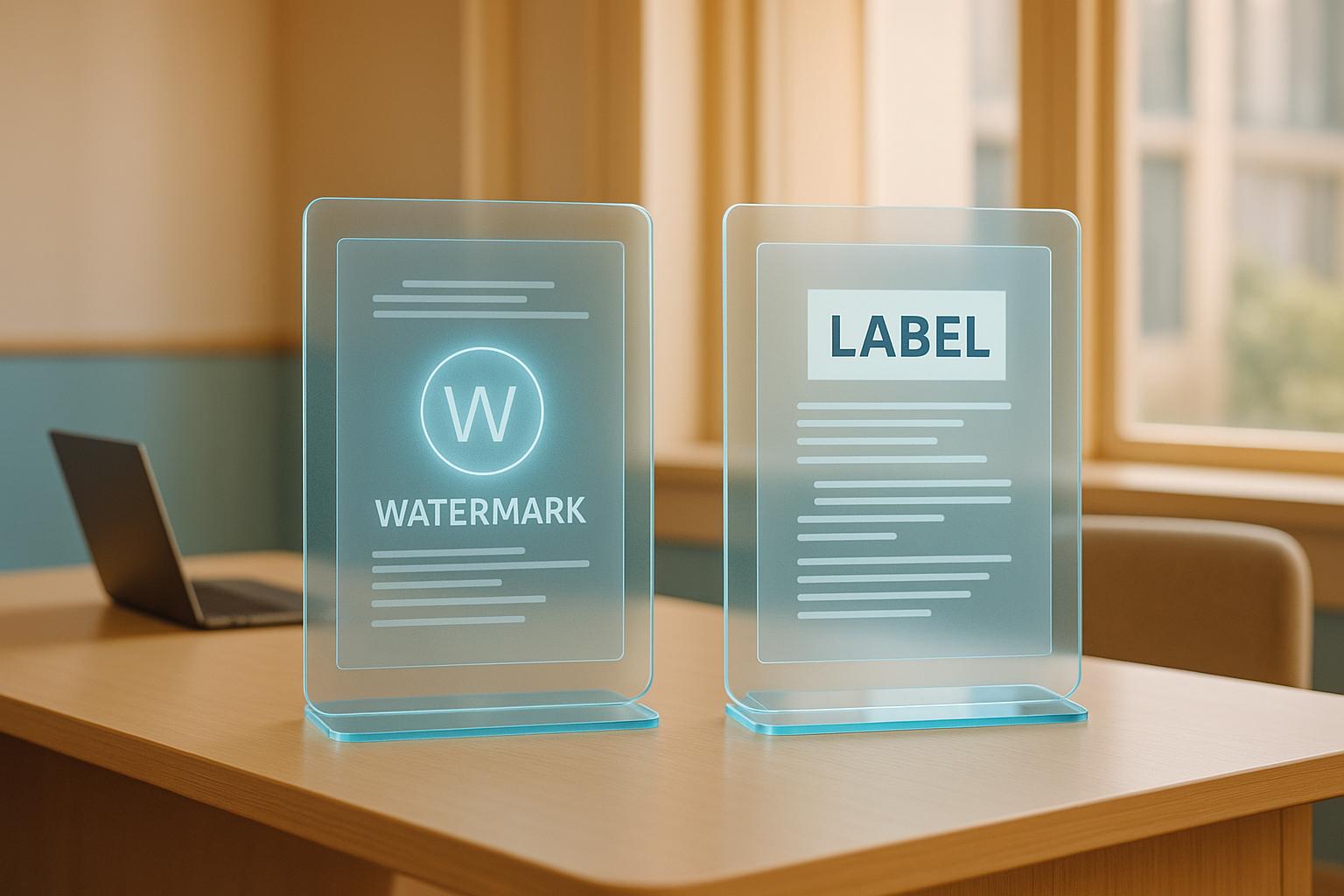
To meet these standards, implement the following actions before the deadlines:
- Adopt C2PA Standards: Embed C2PA credentials into all AI-generated assets to ensure provenance tracking. This is the primary technical requirement under the EU AI Act.
- Configure Disclosure Labels: Ensure all public-facing AI content includes clear human-readable disclosures, as required by California SB 942.
- Audit Generated Outputs: Regularly test AI tools to verify that watermarks and metadata are not stripped during editing or distribution.
- Update Terms of Service: Revise platform agreements to clarify how AI content is identified and handled.
- Monitor Regulatory Updates: Keep track of final implementing acts from the EU and enforcement guidelines from California to adjust compliance strategies accordingly.
2026 AI Watermarking Compliance Timeline
Organizations must track distinct enforcement windows depending on their jurisdiction. California’s SB 942 takes effect first on January 1, 2026, requiring providers to make AI detection tools available at no cost to users. This early deadline creates an immediate compliance obligation for platforms operating in the state.
The European Union’s AI Act follows later, with its transparency provisions—including AI-generated content watermarking standards—taking effect on August 1, 2026. Non-compliance carries significant financial penalties, with fines reaching €15 million or 3% of global turnover. The staggered timeline allows organizations to prepare for the stricter EU requirements after addressing California’s initial mandates.
While Microsoft plans to introduce watermark settings in late February 2026, these platform-specific updates do not replace broader regulatory compliance. Adhering to C2PA standards remains essential for meeting both state and federal expectations.
Frequently asked questions about AI watermarks
The EU AI Act and California SB 942 impose different obligations on AI providers and deployers. Understanding these distinctions is critical for compliance before the 2026 deadlines.
These regulations highlight the need for robust technical implementation. Organizations should align their AI output pipelines with C2PA specifications to meet both EU and US standards effectively.
No comments yet. Be the first to share your thoughts!