Why watermarking matters in 2026
Watermarking has shifted from a technical convenience to a compliance necessity. The EU AI Act explicitly requires labeling AI-generated content, making digital watermarks a critical component for legal adherence. Platforms are increasingly aligning with these regulations, enforcing policies that penalize unmarked synthetic media. This regulatory pressure transforms watermarking from an optional feature into a baseline requirement for content publishers.
The stakes are high for creators and businesses alike. Search engines and social platforms are deploying detection algorithms that flag content lacking verifiable origin markers. Without a robust watermarking strategy, your content risks being deprioritized or removed entirely. This isn't just about protecting intellectual property; it's about maintaining visibility and trust in an increasingly automated digital landscape.
As we move deeper into 2026, the distinction between human and AI-generated content will blur further. Watermarks serve as the primary mechanism for verification. They provide a transparent layer of authenticity that regulators, platforms, and audiences increasingly demand. Ignoring this shift is no longer a viable option for serious content strategies.
How invisible watermarks protect SEO
Invisible watermarking works by embedding imperceptible signals directly into the pixel data of images or the statistical patterns of text. Unlike visible overlays that degrade visual appeal, these digital fingerprints remain undetectable to the human eye while providing a machine-readable layer of authenticity. This technical distinction allows creators to maintain high-quality content standards required by search algorithms while simultaneously proving origin.
Search engines increasingly prioritize content with verifiable provenance. By embedding signals that algorithms can detect, invisible watermarks help distinguish original or licensed AI-assisted work from scraped or unverified material. This verification layer supports compliance with emerging regulations, including the EU AI Act, which mandates transparency in AI-generated content. Platforms that can automatically detect these signals are better positioned to rank content that meets trust and safety standards.
The mechanism preserves content quality by distributing noise across the entire dataset rather than concentrating it in a single visible mark. For text, models like SynthID alter token probabilities slightly, ensuring the output remains natural to readers while remaining traceable to its source model. For images, the signal is woven into frequency domains, surviving minor edits or compression. This balance allows publishers to use AI tools for efficiency without sacrificing the integrity signals that drive organic search visibility.
Top tools for image watermarking
The landscape for AI image watermarking has shifted from experimental research to practical compliance. With the EU AI Act requiring clear labeling of AI-generated content, creators and enterprises need tools that embed invisible signals without degrading visual quality. The following products integrate directly with major generation models or offer standalone verification, ensuring your content remains authentic and traceable.
Adobe Firefly and Photoshop
Adobe leads the industry by embedding the C2PA standard directly into its generative tools. When you use Firefly to create an image, Adobe automatically applies an invisible digital watermark to the pixels. This approach satisfies both platform policies and emerging regulatory requirements for provenance. For editors, Photoshop offers manual watermarking features that allow for visible branding or the addition of metadata tags before export. This dual capability makes Adobe the most robust option for professional workflows that require both invisible authentication and visible copyright protection.
Microsoft Image Creator (Bing)
Microsoft has implemented invisible watermarking across its Bing Image Creator platform. Every image generated through the service contains a hidden signal that identifies it as AI-generated. This is particularly useful for users who need to ensure their outputs comply with social media platforms that mandate AI disclosure. While you cannot easily extract or view this watermark manually, its presence serves as a compliance baseline. If you are distributing content created on Bing, the watermark is already in place, reducing the need for additional verification steps.
Hugging Face Open Source Tools
For developers and researchers, Hugging Face provides open-source libraries that allow for custom watermarking implementations. These tools often rely on techniques described in academic papers, such as those from the arXiv study on generative AI adoption. While they lack the polished user interface of commercial products, they offer flexibility for integrating watermarking into custom AI pipelines. This is the best route for teams building proprietary models that need to embed their own unique verification signals.


As an Amazon Associate, we may earn from qualifying purchases.
Text and audio watermarking solutions
As generative AI becomes ubiquitous, the EU AI Act and major publishing platforms are moving beyond voluntary guidelines to require verifiable provenance for synthetic content. Watermarking has emerged as the technical standard for this compliance, embedding imperceptible markers directly into LLM outputs and voice synthesis pipelines. Unlike metadata tags that can be stripped, these cryptographic or statistical signatures remain embedded in the content itself, allowing automated systems to verify authenticity without degrading the user experience.
The primary challenge for text and audio watermarking is balancing detectability with quality. Early methods introduced noticeable linguistic quirks or audio artifacts, but recent production-ready schemes have largely solved this. Tools like SynthID-Text now allow publishers to embed watermarks that preserve readability while achieving high detection accuracy, ensuring that compliance measures do not alienate readers or listeners.
The following comparison outlines the leading solutions for text and audio watermarking, focusing on their detection capabilities, impact on content quality, and alignment with current platform policies.
| Tool | Media Type | Detection Accuracy | Quality Impact | Policy Alignment |
|---|---|---|---|---|
| SynthID-Text | Text | High | Minimal | EU AI Act, Open Platform Standards |
| AudioMark | Audio/Voice | Moderate to High | Low | Platform-specific TOS |
| Robust Watermarking (arXiv) | Text | High | Negligible | Academic/Research Standards |
| VoiceGuard | Audio/Voice | High | Low | EU AI Act (Draft) |
For organizations managing high volumes of synthetic content, integrating these tools into the generation pipeline is no longer optional. It is a foundational requirement for maintaining trust and adhering to emerging regulatory frameworks. As detection algorithms evolve, the focus is shifting toward robust, imperceptible markers that can withstand editing and translation, ensuring that provenance remains intact throughout the content lifecycle.
Verify content authenticity with detection tools
Verifying whether content is AI-generated is no longer just about spotting deepfakes; it is a compliance requirement under the EU AI Act and major platform policies. To audit your own or competitors' content, you need a systematic approach that combines metadata checks with active detection software. This process ensures that your digital assets remain transparent and legally compliant.
Start by inspecting the file’s technical footprint. Look for C2PA (Coalition for Content Provenance and Authenticity) credentials or EXIF data that explicitly state the content was AI-generated. These metadata tags are becoming the primary evidence for regulatory compliance, offering a verifiable chain of custody that simple visual inspection cannot provide.
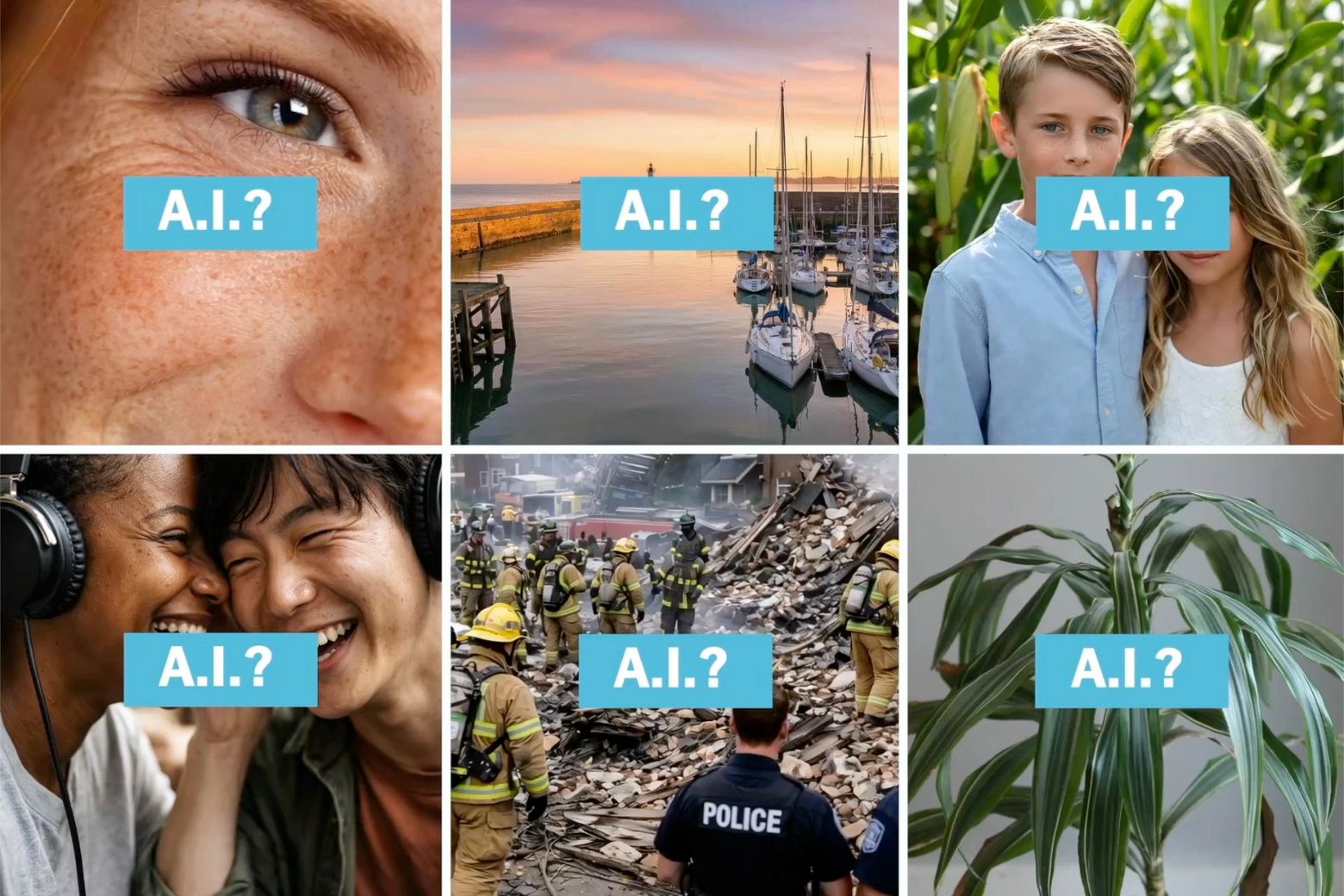
Use dedicated detection platforms to analyze the content for statistical anomalies. Tools like those from Google or Microsoft examine pixel-level patterns and noise distributions that are characteristic of generative models. While no tool is 100% accurate, these services provide a probability score that helps you assess the likelihood of AI involvement, which is critical for internal audits and content moderation.
Finally, cross-reference your findings with the specific guidelines of the platforms where the content will be published. The EU AI Act requires high-risk AI applications to be transparent, and social media giants are increasingly mandating labels for synthetic media. Ensuring your content meets these specific policy requirements protects your brand from removal and legal penalties.
Frequently asked questions about AI watermarking
How to spot AI images in 2026?
Visual detection has become more nuanced as models improve. Look for inconsistencies in eye reflections, unnatural blinking patterns, or awkward hand details. For video, check for lip-sync errors or stiff head movements, as most deepfake models still struggle with complex angles. However, visual inspection is no longer reliable for high-quality generative content.
Is AI watermarking visible to the human eye?
Most modern AI watermarking is invisible. These watermarks are embedded as subtle statistical noise in the pixel data or metadata, designed to survive compression and editing. While you cannot see them, specialized detection tools can identify their presence, allowing platforms to verify authenticity without altering the visual experience.
Does the EU AI Act require AI watermarks?
Yes. Under the EU AI Act, providers of generative AI models must implement technical measures to ensure that outputs are detectable as artificially generated. This includes embedding watermarks or metadata. Compliance is mandatory for providers operating in the EU, and non-compliance can result in significant fines.
Can AI watermarks be removed?
Simple metadata tags can be stripped by standard image editors. However, invisible, robust watermarks are designed to withstand common transformations like cropping, resizing, and color adjustments. Removing these requires sophisticated techniques that often degrade image quality, making removal detectable in itself.
No comments yet. Be the first to share your thoughts!