The August 2026 compliance deadline
The regulatory landscape for AI watermarking is shifting from voluntary guidelines to enforceable mandates. Two major jurisdictions are establishing compliance deadlines in 2026, creating a dual-jurisdiction framework that requires organizations to adapt their content generation and distribution pipelines.
The European Union’s AI Act sets the most significant global benchmark. Article 50 of the regulation mandates transparency for AI systems, requiring providers to ensure that content generated by AI is marked as artificially produced or manipulated. This provision takes effect on August 2, 2026. The regulation applies to providers placing AI models on the EU market, regardless of their location, and carries substantial penalties for non-compliance, including fines of up to €15 million or 3% of global turnover.
Simultaneously, California is implementing SB 942, which takes effect on January 1, 2026. This law requires large language model providers to make certain AI detection tools available to the public at no cost. While the EU focuses on labeling the output, California’s approach emphasizes the availability of detection infrastructure. These overlapping timelines mean that any organization operating in both markets must prepare for compliance requirements that begin in early 2026 and intensify by mid-2026.
For content creators and technology providers, this creates a clear compliance horizon. The focus is no longer on whether watermarking will be required, but on how to implement it in a way that satisfies both the technical transparency standards of the EU AI Act and the detection accessibility requirements of California law.
C2PA standards and machine-readable metadata
The EU AI Act mandates a shift from visible watermarks to machine-readable metadata for proving content origin. Article 50 of the Act requires AI providers to embed technical information that allows users to identify AI-generated content. This requirement takes effect on August 2, 2026.
Unlike simple visual overlays, the C2PA standard embeds a cryptographic signature directly into the file. This signature links the content to its creator and the tools used to generate it. The metadata remains invisible to the casual viewer but can be verified by compliant software.
This approach distinguishes itself from visible watermarks, which can be cropped or edited out. Machine-readable metadata provides a persistent chain of custody. It allows platforms and users to verify the authenticity of digital media without relying on visual cues.
Article 50 obligations for AI providers
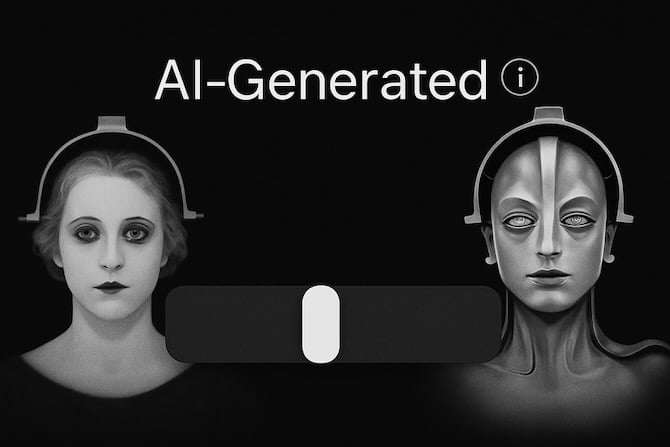
Under the EU AI Act, Article 50 places specific transparency duties on providers of generative AI systems. These obligations take effect on August 2, 2026, requiring providers to ensure that AI-generated content is marked in a way that is detectable by machines. This machine-readable watermarking is designed to prevent the unauthorized or deceptive use of synthetic media.
The technical implementation relies heavily on the C2PA (Coalition for Content Provenance and Authenticity) standard. Providers must embed metadata that traces the origin and editing history of the content. This approach moves beyond simple visual watermarks, creating a robust digital fingerprint that authorized tools can verify.

Beyond technical marking, the Act mandates clear user disclosures. Systems must be configured to inform users when they are interacting with AI or when they are generating synthetic content. This dual layer of machine-readable tags and human-readable notices ensures transparency across both automated detection systems and direct user experience.
To maintain compliance, providers must also keep detailed technical documentation. This records how the watermarking and disclosure mechanisms function, ensuring that the system remains effective and adaptable to new threats. The requirements focus on creating a verifiable chain of authenticity for all AI-generated outputs.
- Implement C2PA-compatible watermarking for all outputs.
- Provide clear, visible disclosures to end users.
- Maintain technical documentation of transparency measures.
- Ensure detectability by authorized verification tools.
Detection tools and platform responsibilities
The enforcement of AI watermarking relies heavily on the availability of detection infrastructure. While the EU AI Act places the primary burden on deployers to ensure transparency, other jurisdictions are mandating the tools themselves. California’s approach, established by SB 942, requires that AI detection tools be made available at no cost to users. This law does not take effect until January 1, 2026, creating a specific deadline for providers to ensure their detection mechanisms are accessible without charge.
In contrast, the EU AI Act focuses on the obligations of those deploying the technology. Article 50 requires both watermarking at the creation stage by providers and deepfake detection and disclosure by deployers. This distinction means that while California mandates the free availability of detection software, the EU mandates the operational duty to detect and disclose synthetic content.
The following table compares the specific requirements for detection tools and platform responsibilities under these two major regulatory frameworks.
| Requirement | California (SB 942) | EU AI Act (Article 50) | Effective Date |
|---|---|---|---|
| Detection Tool Access | Must be provided free of charge to users | Not explicitly mandated as free; focus is on deployer capability | January 1, 2026 |
| Primary Obligation | Tool availability and provider watermarking | Deployer detection and disclosure | August 2, 2026 |
| Scope of Detection | Broad AI-generated content | Deepfake detection and disclosure | August 2, 2026 |
These differing approaches highlight a split in regulatory strategy. California prioritizes user access to verification tools, while the EU prioritizes the accountability of the entities deploying AI systems. Platforms operating in both jurisdictions must navigate these distinct requirements to remain compliant.
Frequently asked questions about AI watermarking
The EU AI Act’s transparency requirements regarding AI-generated content take effect on August 1, 2026, with fines up to €15 million or 3% of global turnover for non-compliance. As the regulatory landscape shifts, understanding the practical implications of these mandates is essential for developers and content creators.
No comments yet. Be the first to share your thoughts!