Why 2026 changes AI labeling
The regulatory landscape for generative AI is shifting from voluntary guidelines to mandatory compliance. On August 2, 2026, two significant pieces of legislation will take effect, creating a unified demand for watermarking standards 2026 across major markets. For the first time, AI-generated content must carry embedded proof of its origin to meet legal standards.
The European Union’s AI Act and California’s California AI Transparency Act (CAITA) share a common deadline. These laws target the growing volume of synthetic media by requiring transparent labeling. Without proper watermarks, creators and platforms risk significant penalties. This deadline creates a hard stop for organizations that have relied on self-regulation.
Compliance is no longer optional. The focus is shifting from whether to label content to how to implement robust C2PA standards. Businesses must audit their current workflows to ensure they can attach verifiable credentials to AI outputs before the August 2026 enforcement date. The window for preparation is closing rapidly.
What C2PA Actually Does
The Coalition for Content Provenance and Authenticity (C2PA) is an open technical standard that attaches a digital receipt to media files. Think of it as a tamper-evident chain of custody for digital content. It records who created the file, what tools were used, and every edit applied along the way. This creates a verifiable history that platforms and viewers can check.
C2PA does not rely on visible watermarks alone. Instead, it embeds encrypted metadata directly into the file structure. This data persists even if the image is copied or shared across different platforms. The standard allows viewers to see a credential indicator, but the underlying data remains intact for forensic analysis.
This technical backbone is becoming the primary mechanism for complying with upcoming regulations. The EU AI Act and similar frameworks in other jurisdictions are shifting toward requiring these content credentials rather than just relying on platform-specific labels. By 2026, C2PA compliance will likely be the baseline for legitimate synthetic media distribution.
The system works by linking the file to a public key infrastructure. When a viewer sees a credential, their software verifies the signature against the publisher's public key. If the file has been altered after signing, the verification fails. This prevents bad actors from stripping provenance data without leaving a trace.
EU AI Act Article 50 Requirements
The European Union’s AI Act establishes a rigorous framework for generative AI providers, with Article 50 serving as the central mandate for transparency. This provision requires providers to design their models so they can detect and identify AI-generated content. The goal is to ensure that synthetic media is clearly distinguishable from human-created material, addressing growing concerns about misinformation and deepfakes.
Compliance is not merely about adding a visible signature. The regulation demands a two-part approach. First, providers must implement technical watermarking that embeds invisible signals into the output. Second, they must publish detailed technical documentation describing how these signals are generated and maintained. This documentation must be made available to authorities and, in some cases, to the public.
The deadline for full compliance is August 2, 2026. By this date, all generative AI systems deployed in the EU market must meet these marking and disclosure standards. Failure to comply can result in significant fines, up to 7% of global annual turnover, making this a critical operational milestone for any company operating in the region.
The technical implementation focuses on robustness. Watermarks must survive common post-processing steps such as compression, cropping, or format conversion. Providers are expected to use cryptographic methods, such as those aligned with the C2PA standard, to ensure the integrity of the metadata. This ensures that the origin of the content can be verified even if the file has been modified after generation.
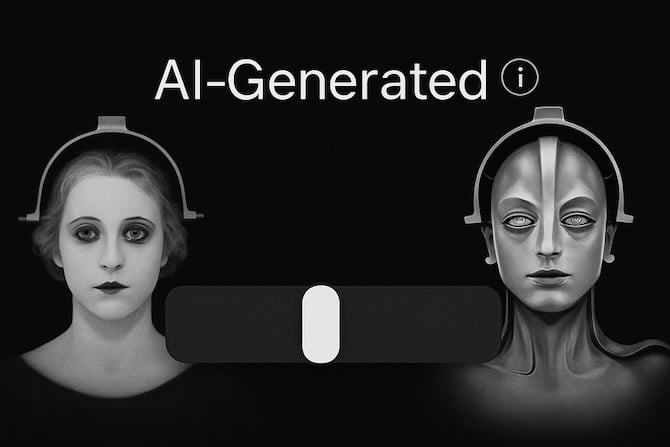
Disclosures must also be clear and accessible. When AI-generated content is published, users must be informed that the material is synthetic. This disclosure can be embedded in the file metadata or presented as a visible label, depending on the context and the type of media. The requirement is designed to empower users to make informed decisions about the content they consume.
-
Implement invisible technical watermarking in output files
-
Publish detailed technical documentation on marking methods
-
Ensure disclosures are visible and accessible to users
-
Verify watermark robustness against common file transformations
California CAITA compliance steps
California’s California AI Transparency Act (CAITA) runs parallel to the EU AI Act, with both regimes taking effect on August 2, 2026. While the EU focuses heavily on general transparency and risk categories, CAITA zeroes in on specific disclosures for synthetic media, particularly video and audio content generated by AI. Businesses operating in California must navigate these requirements with an understanding that while the underlying technology—C2PA watermarks—is similar, the legal obligations differ.
The core requirement under CAITA is the disclosure of AI-generated content. This is not merely a suggestion but a statutory mandate for covered entities. The law requires that synthetic media be clearly labeled so consumers can distinguish it from authentic content. This aligns with the EU’s Article 50, which also mandates machine-readable metadata. However, CAITA places a heavier emphasis on consumer-facing disclosures, meaning the visible watermark or notice must be prominent and easily understandable to the average user.
Compliance involves two main steps: embedding C2PA credentials and ensuring visible disclosure. First, developers must integrate C2PA-compliant watermarking into their generation pipelines. This creates an immutable record of the content’s origin. Second, the public-facing output must include a clear indicator, such as a visual badge or text overlay, stating that the content is AI-generated. Failure to comply can result in significant fines, which scale based on the severity and frequency of the violations.
While the EU AI Act applies broadly across member states, CAITA is specific to California but has national implications due to the state’s market size. Companies should treat CAITA as a baseline for US compliance, especially since other states may adopt similar frameworks. The key difference lies in enforcement and specificity: CAITA provides clearer guidelines on what constitutes "synthetic media" and how it must be disclosed, making it slightly more prescriptive than the broader EU framework.
Synthetic media detection tools
Detection tools form the verification layer for C2PA-compliant content. As the EU AI Act enters its enforcement phase, platforms increasingly rely on these tools to validate digital credentials embedded in media files. The goal is not to catch every error, but to confirm provenance where it matters.
Major technology providers have taken different paths. Google uses SynthID to embed invisible watermarks in text and images, allowing automated systems to flag synthetic content. This approach aligns with the C2PA standard by providing machine-readable proof of origin. Similarly, other platforms are integrating detection APIs that check for C2PA signatures in metadata.
However, detection is not foolproof. OpenAI paused its text watermarking features after finding they impacted legitimate users in certain regions, highlighting the trade-off between detection accuracy and user experience. Tools must balance strict verification with the risk of false positives.
For organizations managing content at scale, manual review is no longer viable. Automated detection tools that support C2PA standards offer a path to compliance with Article 50 of the EU AI Act. These tools verify that media has not been altered since creation, providing a chain of custody that is both transparent and auditable.
-
Verify C2PA embedding in source files
-
Test detection tools against known synthetic samples
-
Confirm metadata persistence across distribution platforms
Common AI watermarking mistakes
Even with C2PA standards in place, creators and platforms frequently trip up on implementation details. The most frequent error is treating visible watermarks as sufficient proof of origin. While a subtle overlay might deter casual scraping, it does not satisfy the machine-readable requirements of modern compliance frameworks. Regulations, such as those under the EU AI Act, prioritize embedded metadata that persists through editing and sharing. Relying solely on visual cues leaves content vulnerable to misattribution and regulatory scrutiny.
Another critical pitfall is ignoring how different platforms strip or alter file metadata. Social media sites often compress images and strip EXIF data upon upload, effectively erasing embedded provenance tags if they are not stored within the image file’s native structure (like JPEG or WebP). To avoid this, use formats that support native C2PA embedding rather than relying on external sidecar files. Always test your output by uploading to target platforms and verifying that the signature remains intact after compression.
Finally, many organizations fail to update their watermarking workflows as detection tools evolve. Static watermarks can be removed with basic editing software, rendering them useless against sophisticated synthetic media. Effective compliance requires a dynamic approach that combines robust, invisible digital signatures with regular audits of platform-specific metadata handling. This ensures that your content’s origin remains verifiable regardless of where it travels online.
No comments yet. Be the first to share your thoughts!