The C2PA Standard in 2026
The Coalition for Content Provenance and Authenticity (C2PA) is the primary technical framework for verifying digital content. It provides an open standard that allows publishers, creators, and consumers to establish the origin and edits of media files. By attaching cryptographic signatures to images and videos, C2PA creates a tamper-evident record of a file’s history.
As of 2026, the specification has become the global reference for content authenticity. With over 6,000 members and affiliates, the standard is embedded in major software ecosystems, including Adobe Creative Cloud and Microsoft Office. This widespread adoption means that content verification is no longer a niche capability but a baseline feature for professional media workflows.
The system works by embedding a secure manifest directly into the media file. This manifest contains metadata about the file’s creation, any modifications made, and the identity of the creator. When a viewer opens the file in a compatible application, the software checks the signature to confirm that the content has not been altered since the manifest was created. If the signature is invalid or missing, the viewer is alerted to the potential issue.
While C2PA is the leading standard, it is not a silver bullet. It relies on the honesty of the creator at the point of ingestion. If a file is captured or created without a C2PA-compliant tool, the chain of custody is broken before it begins. Additionally, the standard does not prevent the creation of deepfakes; it only verifies the provenance of the file itself. Understanding these limits is essential for anyone relying on C2PA for verification.
C2pa standard 2026 choices that change the plan
The Content Credentials (C2PA) specification has evolved from a voluntary metadata layer into the global reference for content authenticity, supported by over 6,000 members as of early 2026. However, adopting the standard involves specific technical and operational tradeoffs that creators and platforms must weigh against their verification needs. The shift from "supported" to "relied upon" status means that while the technology is robust, it is not a silver bullet for all authenticity challenges.
When evaluating C2PA for your workflow, consider how the standard handles different types of media and the level of trust required. The table below breaks down the concrete factors you should evaluate, from technical compatibility to legal enforceability.
| Factor | Benefit | Limitation |
|---|---|---|
| Technical Compatibility | Works across major browsers and OS platforms without plugins | Requires recipient software to explicitly support C2PA viewers |
| Legal Weight | Provides cryptographic proof of origin and edit history | Does not automatically prove authorship or copyright ownership |
| Implementation Cost | Open standard reduces licensing fees for adopters | Integration requires significant engineering resources for legacy systems |
| User Trust | Visible credentials build consumer confidence in media | Non-technical audiences may ignore or misunderstand the indicators |
The primary tradeoff lies in the gap between technical verification and legal interpretation. C2PA proves that a file has not been altered since it was signed, but it does not verify the truthfulness of the content itself. A deepfake can be signed by a malicious actor just as easily as a genuine photo. Therefore, the standard is most effective when combined with broader content verification strategies rather than used in isolation.
How to Verify AI Watermarking Standards in Practice
Proving content authenticity requires moving beyond simple visual inspection. The industry standard relies on C2PA (Coalition for Content Provenance and Authenticity) metadata, which embeds a cryptographic chain of custody directly into digital files. This approach shifts verification from guessing to technical proof.
Follow this framework to assess whether content is genuinely verified or simply labeled as AI-generated.
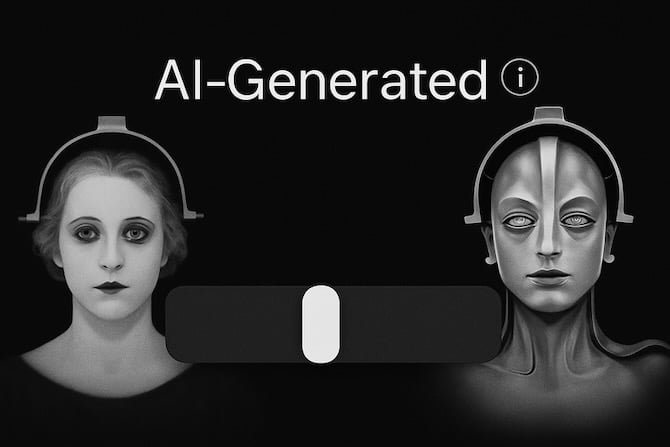
Look for the C2PA logo or a "Content Credentials" badge on the image. This indicates the file contains a signed manifest. You can verify this using official tools like Adobe's Content Credentials Viewer or the C2PA reference validator. If the badge is missing, the file lacks the foundational layer of provenance.

Invisible watermarks, such as Google’s SynthID, are embedded in the pixel data itself and survive compression. They are detected by specialized software, not human eyes. Do not confuse these with C2PA metadata. The most robust verification combines both: metadata for the source chain and invisible watermarks for post-editing detection.

A valid C2PA manifest lists every tool used to create or edit the file, from the AI generator to any photo editing software. Check the log for gaps. If a file shows "Edited in Photoshop" but lacks the original capture metadata, the provenance chain is broken, and the content’s origin is uncertain.
Watermarking and C2PA only work if the creator or platform embeds them. User-generated content on many social platforms may still be stripped or unverified. Additionally, metadata can be removed by downloading or sharing across incompatible platforms. Always treat unverified content as potentially unproven, regardless of AI labels.
Common Misconceptions and Weak Options
Many creators assume that adding a C2PA manifest automatically proves content is human-made. The standard only records edits and origin; it does not detect AI generation. If a photo is edited in Photoshop and signed, the manifest is valid even if the base image was AI-generated. Relying on this signature as proof of authenticity is a critical error.
Another weak option is trusting invisible watermarks alone. These steganographic signals are fragile. Simple image compression, screen captures, or format conversions often strip these hidden markers. While useful for tracing leaks, they should never be the sole verification method. Always combine them with robust provenance standards like C2PA for reliable content verification.
C2pa standard 2026: what to check next
C2PA (Coalition for Content Provenance and Authenticity) is the leading technical standard for verifying digital content origin. Rather than relying on fragile invisible watermarks, it embeds cryptographic signatures into files to prove who created media and what edits were made.
What is C2PA and how does it work?
C2PA is an open standard managed by the C2PA organization. It attaches machine-verifiable metadata to photos and videos. This metadata includes a digital signature that links the file to its creator and records every significant edit. You can verify this provenance using compliant viewers or platform tools.
Is C2PA the same as an invisible watermark?
No. While both aim to prove authenticity, they function differently. Invisible watermarks are hidden signals embedded in the pixel data that can be removed or altered. C2PA uses cryptographic certificates stored in the file’s metadata. If the file is modified, the signature breaks, providing a more reliable verification method.
Do I need special software to read C2PA tags?
Most major platforms now support C2PA verification natively. Browsers and operating systems are integrating viewers that display provenance labels automatically. For manual checks, you can use open-source tools like the C2PA Viewer to inspect the metadata without specialized enterprise software.
Will C2PA stop AI-generated content from spreading?
C2PA does not block content; it labels it. It helps audiences distinguish between verified human-created media and AI-generated or edited content by providing clear provenance data. This transparency allows platforms to apply appropriate labels, helping users make informed decisions about what they see.
No comments yet. Be the first to share your thoughts!