Understand the 2026 watermarking mandate
By August 2026, selecting an AI watermark solution shifts from a technical preference to a strict legal requirement. The European Union AI Act enters its enforcement phase, mandating that high-risk AI systems embed invisible watermarks and provenance metadata into their outputs. This regulation targets the transparency of AI-generated content, ensuring that users can distinguish between human-created and machine-generated material.
The C2PA (Coalition for Content Provenance and Authenticity) standard provides the technical framework for this compliance. It establishes a secure chain of custody for digital assets, allowing organizations to verify the origin and history of content. Failure to implement these standards risks significant penalties and loss of trust in an increasingly regulated digital landscape.
Compliance Alert: The EU AI Act enforcement begins August 2026, making invisible watermarking and provenance metadata mandatory for high-risk AI systems.
Major AI providers are already aligning their infrastructure with these mandates. Anthropic, for example, announced that its Claude models will watermark both text and images to comply with European regulations. This move signals industry-wide adoption, as leading labs prioritize regulatory adherence to maintain market access. Organizations must evaluate their current watermarking capabilities against these specific 2026 requirements to avoid non-compliance.
Visible vs. Invisible Watermarking Methods
Choosing the right AI watermark depends on your content format and regulatory obligations. Visible watermarks overlay text or images, while invisible watermarks embed steganographic signals that require specialized detection tools. Under the EU AI Act and C2PA standards, the choice often hinges on whether the primary goal is immediate public transparency or backend compliance auditing.
Visible Watermarks: Immediate Transparency
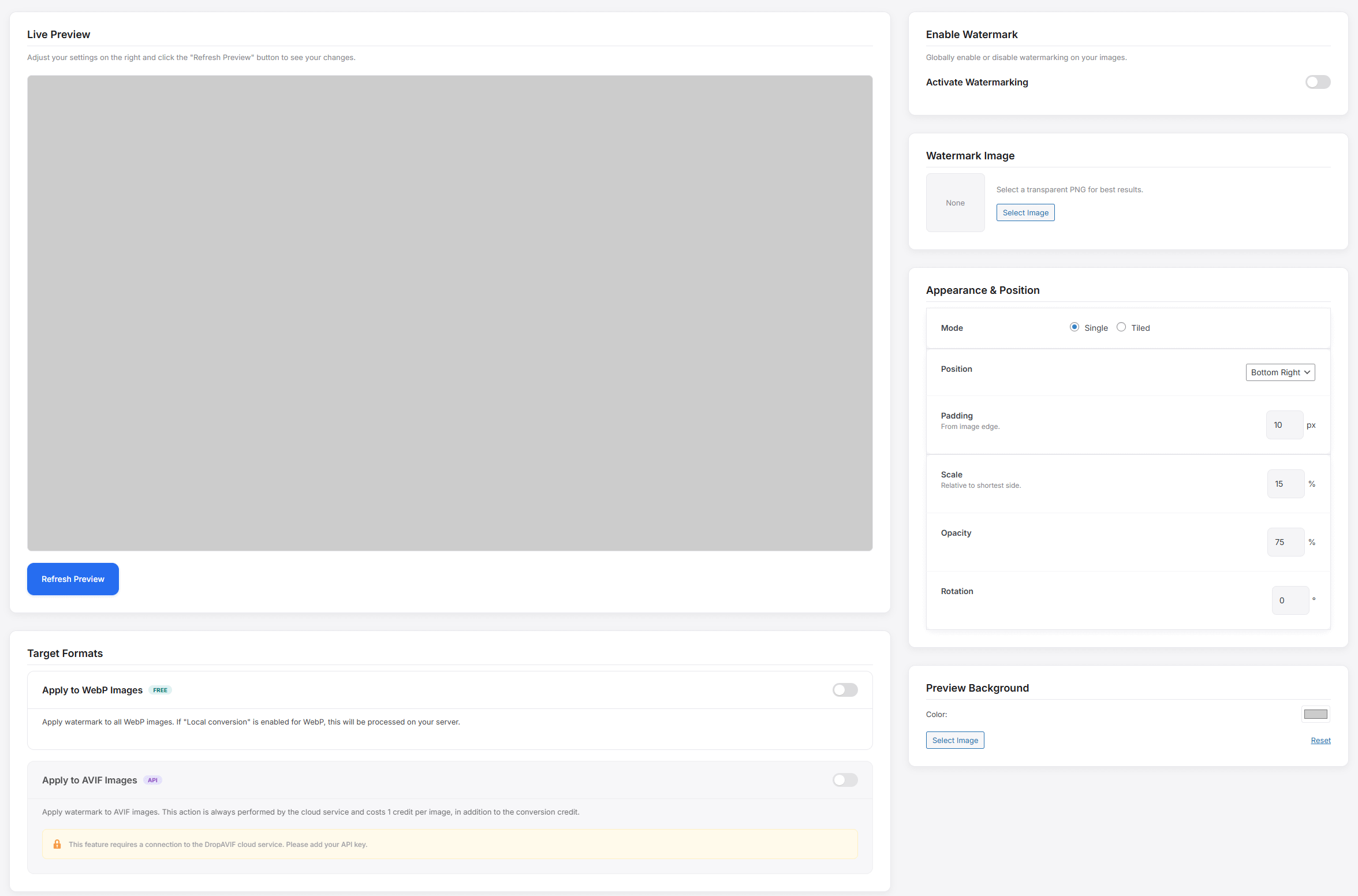
Visible watermarks are designed for instant recognition. They typically appear as semi-transparent text overlays, such as "Generated by AI," or distinct visual patterns on images. This method is most effective for unstructured content like social media graphics, marketing materials, or public-facing documents where immediate disclosure is required by platform policies.
The advantage is clarity; users do not need technical tools to identify the source. However, visible watermarks are fragile. They can be cropped, blurred, or removed entirely without affecting the core content, making them unsuitable for protecting intellectual property or ensuring rigorous regulatory compliance.
Invisible Watermarks: Robust Provenance
Invisible watermarking embeds data into the statistical patterns of the content itself. For text, this often involves subtle variations in word choice or syntax that are imperceptible to humans but detectable by AI classifiers. For images, it involves modifying pixel values in a way that survives compression and editing.
This method is the standard for high-stakes compliance. For example, Anthropic’s Claude implementation embeds invisible watermarks in all AI-generated text and signed provenance metadata. This allows platforms and regulators to verify content origin even after the text has been copied or paraphrased, providing a durable audit trail.
Comparison of Watermarking Methods
The following table compares the three primary watermarking approaches based on detectability, robustness, and user experience.
| Method | Detectability | Robustness | User Experience |
|---|---|---|---|
| Visible Watermark | Immediate (Human) | Low | High (Obtrusive) |
| Invisible Watermark | Delayed (Machine) | High | None (Transparent) |
| Metadata (C2PA) | Delayed (Machine) | Medium | None (Transparent) |
Choosing the Right Approach
For image-heavy content like infographics or product photos, visible watermarks are often necessary to deter unauthorized use. However, for text-based content, invisible watermarking is superior. It preserves the user experience while ensuring that compliance checks can be performed automatically.
If your primary concern is legal liability or regulatory reporting, invisible watermarking combined with C2PA metadata is the recommended standard. It provides a verifiable chain of custody that visible overlays cannot match.


As an Amazon Associate, we may earn from qualifying purchases.
Verify tool compatibility with C2PA standards
Selecting an AI watermarking solution requires more than checking feature lists; it demands strict adherence to the Coalition for Content Provenance and Authenticity (C2PA) specifications. As the 2026 regulatory landscape solidifies around the EU AI Act and similar frameworks, interoperability has become the primary metric for compliance. Tools that do not natively support C2PA standard metadata will fail to provide the legal defensibility required for high-stakes content publishing.
Follow this four-step process to verify that your chosen AI generation tool is fully compatible with current provenance standards.
Begin by reviewing the tool’s technical documentation or API reference. Look for explicit mentions of C2PA version 1.3 or later. Major providers such as Anthropic have integrated C2PA-compliant watermarks into their Claude implementations, embedding verified metadata directly into generated outputs. If the documentation is vague or silent on C2PA, the tool likely lacks the necessary infrastructure for legal compliance.
Generate sample content using the tool and inspect the resulting file metadata. Use a C2PA verification tool to ensure the manifest is present and correctly signed. The metadata must contain a cryptographic signature linking the content to its origin. Without a verifiable signature, the watermark is merely a cosmetic label, offering no protection against tampering or false attribution.
Ensure the watermark can be detected by independent verification services. The C2PA standard is designed to be open and interoperable; therefore, your tool’s output should be readable by any compliant verification platform. Test the output against multiple detectors to confirm that the watermark persists across file format conversions and platform uploads, which is critical for maintaining provenance across different digital channels.
Evaluate the robustness of the watermark against common editing operations. A compliant tool must embed the watermark in a way that survives standard editing processes such as cropping, resizing, or format conversion. While no watermark is entirely undeletable, C2PA-compliant systems use cryptographic binding to detect if the content has been altered. If the signature breaks upon minor edits, the tool fails to meet the integrity standards required for 2026 compliance.
Choosing a tool that passes these checks ensures that your content remains legally defensible. In a regulatory environment where provenance is increasingly mandatory, relying on non-compliant tools introduces significant liability. Prioritize tools with transparent, C2PA-native architectures to future-proof your operations.
Test detection accuracy before deployment
Before deploying an AI watermarking solution, you must validate that the signal survives detection and resists casual removal. The EU AI Act’s August 2026 enforcement window requires proof that your system meets the designated standards, not just internal claims. Relying on vendor assertions without independent verification creates significant compliance risk.
1. Verify signal readability with official detectors
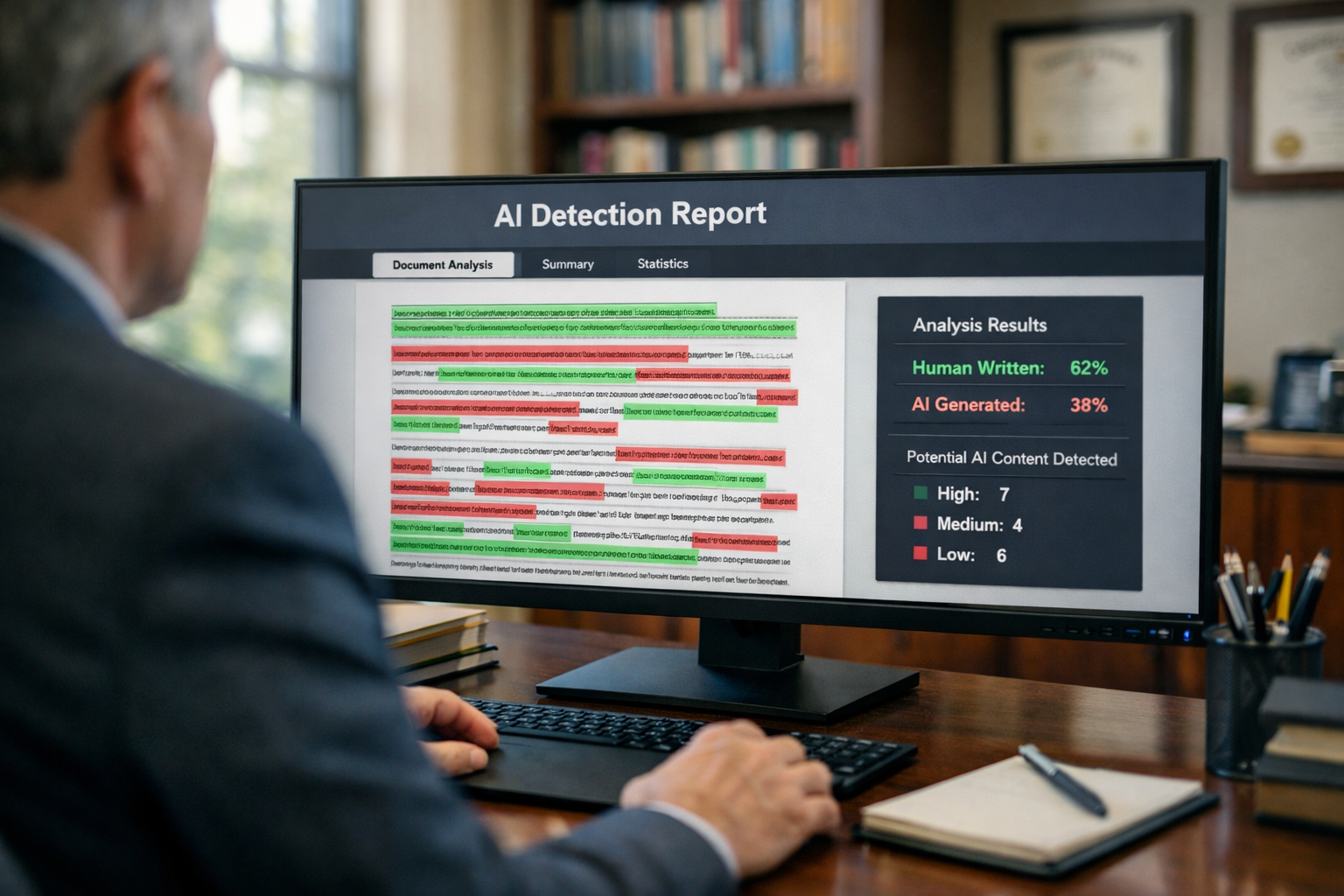
Use established detection tools to confirm the watermark is present and readable. For text-based implementations, Anthropic’s Claude models provide a clear benchmark for invisible watermarking. Run your generated content through these detectors to ensure the AI-generated tag is correctly identified by third-party scanners. If the detector fails to flag the content, the watermark is either too weak or improperly encoded.
2. Test resistance to simple editing
A compliant watermark must remain intact after basic content modifications. Apply standard editing operations—such as paraphrasing, synonym replacement, or minor reformatting—and re-run the detection test. If the signal disappears after a simple edit, the watermark is not robust enough for legal or regulatory purposes. Document these results to demonstrate resilience against trivial stripping attempts.
3. Validate metadata integrity
For image and document workflows, ensure the C2PA or similar metadata standards are preserved. Check that the cryptographic signature and provenance data remain unaltered after the watermarking process. Use verification tools to confirm that the metadata chain is complete and unbroken. Any gaps in the metadata chain can invalidate the watermark’s legal standing.
4. Document your validation results
Keep detailed records of your testing procedures, including the tools used, the test cases, and the outcomes. This documentation is critical for demonstrating compliance during audits. If a detection tool flags the content as undetectable or easily stripped, adjust your implementation before deployment. The cost of fixing a flawed watermark post-deployment far exceeds the effort of pre-validation.

Use official or third-party detection tools to verify the watermark is present. For text, test against Anthropic’s Claude detection benchmarks. Record whether the content is correctly flagged as AI-generated.
Modify the content through paraphrasing, formatting changes, or minor edits. Re-run the detection scan to ensure the watermark signal remains readable. If the signal is lost, the implementation is not compliant with robustness standards.
For images and documents, check that C2PA or equivalent metadata is intact. Use verification tools to confirm the cryptographic signature is unbroken. Ensure no gaps exist in the provenance chain.
Record all test cases, tools used, and outcomes. This documentation proves compliance during regulatory audits. If tests fail, adjust the implementation before deployment to avoid penalties.
Address Common Watermark Removal Risks
Current watermarking technology faces significant limitations, particularly regarding text-based AI outputs. Research indicates that invisible text watermarks remain trivial to remove through simple paraphrasing or editing tools. This vulnerability creates a compliance gap: while the watermark may be technically present, it can be stripped without leaving obvious traces, undermining the integrity of the disclosure.
To mitigate these risks, adopt a layered security strategy rather than relying on a single detection method. Combine machine-readable signals, such as the C2PA standard, with visible disclosures. For example, Anthropic’s implementation for Claude models launched on or after August 2, 2026, supports machine-readable marking from launch. However, this technical layer must be supplemented by clear, visible labeling to ensure human-readable compliance.
Regulatory bodies like the EU are treating these vulnerabilities seriously. The EU AI Act, enforceable from August 2026, requires robust transparency measures. Relying solely on digital watermarks is insufficient; organizations must verify that their chosen watermarking solution integrates with broader content provenance frameworks to withstand removal attempts.
Frequently asked questions about AI watermarks
These questions address the technical reality and legal standing of AI watermarks under 2026 compliance frameworks.
These answers reflect the current enforcement landscape. As regulations tighten, the technical and legal stakes will continue to rise.
No comments yet. Be the first to share your thoughts!