
What changed in AI watermarking 2026
Detection is no longer an optional quality check; it is now a regulatory requirement. Starting August 2, 2026, the EU AI Act mandates that AI model providers embed machine-readable watermarks in generated text. This shift moves invisible AI watermarking from a technical experiment to a standard part of the editorial workflow.
Anthropic was among the first major providers to implement this change. All Claude models released after the August 2 deadline automatically carry embedded watermarks in their output. This applies to both raw text and files generated by the system, ensuring that compliance is baked into the model architecture rather than added as a post-processing step.
For editors and content teams, this means that detecting these watermarks is now a first step in verifying content origin. The technology is designed to be persistent, making it harder to strip without degrading the quality of the text. Understanding this new baseline is essential before attempting any removal techniques.
As these watermarks become standard across the industry, the focus of detection tools is shifting from simple identification to robust verification. This ensures that the integrity of human-written content is preserved against the growing volume of AI-generated material.
Step by step: Detecting hidden AI marks
Invisible AI watermarks don’t sit inside the text like a visible stamp. Instead, they subtly shift which words an AI model picks at each generation step, using a secret cryptographic key to split vocabulary into "green" and "red" sets. Because the output looks and reads like normal text, detection requires statistical analysis rather than simple text searching.
To identify these hidden marks, you need to reconstruct the pattern that the model used during generation. This involves testing whether specific tokens in the text align with the expected distribution of the green set. If the alignment is statistically significant, the text likely contains a watermark.
The following workflow outlines the technical steps required to detect these invisible signatures.
Before you can analyze a watermark, you must convert the raw text into a sequence of tokens. AI models don’t read words; they process numerical IDs. Use your target model’s tokenizer (such as the one from the Hugging Face Transformers library) to break the text down into its constituent token IDs. This preserves the exact structure the AI used during generation, which is essential for accurate detection.

Watermark detection relies on a secret key that determines how vocabulary is split. If you are testing a specific model (like Claude or GPT-4), you typically need the developer’s implementation or a public verification tool that exposes the key’s logic. You will use this key to generate a deterministic hash for every token in your sequence. This hash tells you whether a token belongs to the "green" set (likely watermarked) or the "red" set (likely random).

Once you have classified every token as green or red, calculate the ratio of green tokens across the entire text. In a normal, non-watermarked text, this ratio should hover around 50%. However, AI-generated text with a watermark will show a statistically higher percentage of green tokens. You can use a simple binomial test to determine if the observed ratio deviates significantly from chance.

A high green-set ratio alone isn’t proof; you need to confirm it’s not just a coincidence. Apply a statistical test, such as a z-test or binomial test, to the green-set counts. If the p-value is below a standard threshold (like 0.05), you can confidently state that the text contains a watermark. This step filters out false positives caused by unusual word choices or stylistic quirks.
For practical use, you don’t need to write code from scratch. Several open-source tools and browser extensions automate this process. Upload your text or paste it into a detection interface that implements the specific watermark algorithm for the model in question. These tools provide a confidence score and highlight the sections that triggered the detection, giving you a clear report on the text’s origin.
Removing watermarks without breaking text
Simple editing rarely works. AI watermarks do not hide as visible tags or metadata. They are statistical signatures embedded in word choice. A detector scans the probability distribution of every token. If the pattern matches the secret key, the text is flagged. Changing a synonym here and there leaves the underlying structure intact. The detector still sees the same fingerprint.
To remove the watermark, you must break the statistical pattern. This requires rewriting the text to alter the token probabilities. The goal is to shift the output away from the watermark’s specific distribution. You are not deleting a file; you are changing the DNA of the text.
The rewriting strategy
Start by identifying the core meaning of each sentence. Then, rewrite it from scratch using your own voice. Do not just swap words. Change the sentence structure. Use active voice where the original was passive. Combine short sentences or split long ones. This disrupts the sequence of tokens that the watermark relies on.
Focus on the first few words of each paragraph. These often carry the strongest signal in statistical watermarks. Rewrite these opening phrases carefully. Ensure the new wording is natural and fits the context. The detector looks for consistency in the pattern. A sudden shift in style can confuse it, but only if the meaning remains clear.
Why simple editing fails
Editing tools often suggest replacements that keep the statistical profile similar. This is because they aim for semantic similarity, not statistical divergence. If you use a thesaurus or a basic rewriter, you might change the words but keep the "random" seed structure. The watermark survives because the underlying probability distribution hasn’t changed enough.
Think of it like a fingerprint. You can change the color of the ink, but the ridge pattern remains. To remove the watermark, you need to change the ridge pattern. This means fundamentally restructuring the text. It is not a cosmetic fix. It is a structural one.
Practical steps for removal
- Analyze the text: Read through to understand the core message. Identify key points that must remain.
- Rewrite sentence by sentence: Do not copy-paste. Type out new sentences that convey the same idea.
- Vary sentence length: Mix short and long sentences. This disrupts the rhythm that watermarks often exploit.
- Check the output: Use a watermark detector to verify the removal. If it still flags, rewrite again.
This process is tedious. It requires effort and attention to detail. But it is the only reliable way to remove invisible AI watermarks. Tools that promise instant removal often fail because they do not alter the statistical signature.
The technical reality
AI watermarking works by biasing the model’s choices. At each step, the model picks a word from a probability distribution. The watermark shifts this distribution slightly. Over thousands of words, these small shifts add up to a detectable signal. Removing the watermark means removing this bias.
You cannot "delete" the watermark. It is not a separate entity. It is part of the text itself. You must rewrite the text to remove the bias. This is why human rewriting is essential. Automated tools often preserve the bias because they are trained on similar data.
Final checks
After rewriting, test the text. Use multiple detectors if possible. Different detectors use different algorithms. If one flags it, another might not. But if all detectors agree the text is clean, you are likely safe.
Remember, the goal is not to deceive. It is to ensure your text is your own. Watermarks are a tool for transparency. Removing them should be done with care and respect for the original intent. If you have written the text yourself, you have the right to present it as such.
Common mistakes in watermark removal
Removing invisible AI watermarks requires precision. When you rush the process, you often leave behind the very traces you’re trying to erase. These errors don’t just fail to hide the content; they can make the file more suspicious to detection tools.
Over-editing triggers style detectors
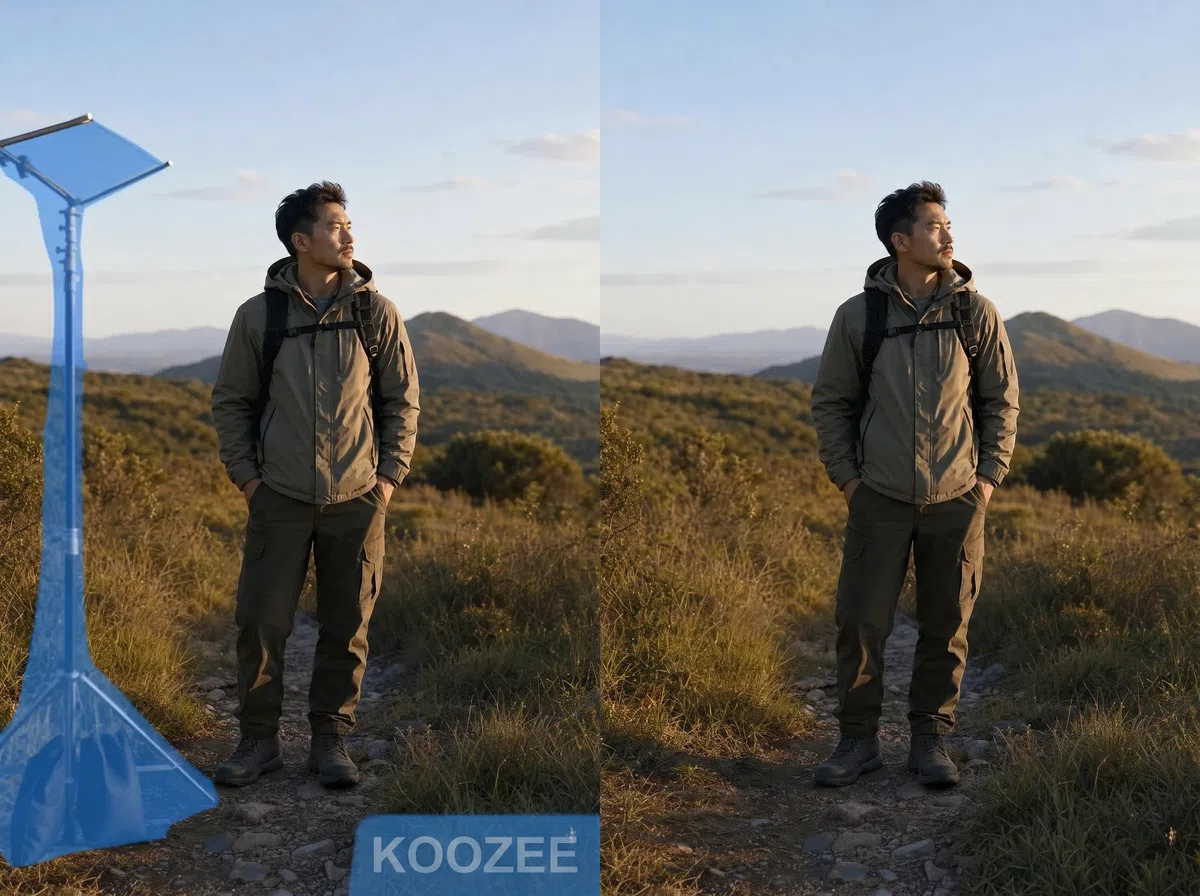
Aggressive edits to break up invisible patterns often backfire. Tools like Koozee AI Removal Tool or similar AI-powered editors can introduce noise or texture inconsistencies that stand out to forensic analysis. If the surrounding pixels don’t match the original lighting or grain, the edit becomes a red flag. The goal is subtle restoration, not heavy-handed alteration.
Failing to strip metadata
An invisible watermark is only half the battle. File metadata often contains creation logs, AI model identifiers, or editing timestamps. If you remove the visible or invisible pattern but leave the metadata intact, the file remains identifiable. Always verify that all EXIF data and hidden tags are cleared before distribution.
Leaving residual artifacts
Incomplete removal leaves faint artifacts. These might be subtle color shifts or slight blurring where the watermark was embedded. Detection models are trained to spot these exact anomalies. A clean removal means the area looks as if the content was always there, with no digital scars.
Verify the content is clean
Before you publish, you must confirm that the invisible AI watermark has been successfully removed. Detection tools work by scanning text for statistical patterns embedded during generation. If these patterns remain, the content will still be flagged as synthetic.
Run your text through a reputable detection tool to check for residual signals. Look for a clear "human" or "clean" result rather than a borderline score. If the tool still detects AI patterns, the watermark may not have been fully stripped, or new artifacts were introduced during editing.
Repeat this verification step until the result is consistently clean. Treat this as your final quality check. Publishing unverified content risks immediate detection and loss of credibility.
Frequently asked questions about AI watermarks
Can AI watermarks be removed? Yes. Text-based AI watermarks are trivial to remove. Techniques like paraphrasing, rewriting, or translating the text back and forth effectively strip the hidden signal without altering the core meaning.
Is it illegal to remove AI watermarks? Legality varies by jurisdiction. In the European Union, the AI Act will enforce new marking requirements starting in August 2026. Removing these marks may violate specific compliance rules depending on how the content is distributed.
Will all AI models have watermarks? Not immediately, but major platforms are adopting machine-readable marking. For example, Claude models launched in the EU after August 2, 2026, will support embedded marking at launch. Expect broader industry adoption as regulations tighten.
No comments yet. Be the first to share your thoughts!