What changed in 2026
AI Watermarking Standards works best as a clear sequence: define the constraint, compare the realistic options, test the tradeoff, and choose the path with the fewest hidden costs. That order keeps the advice usable instead of decorative. After each step, pause long enough to check whether the recommendation still fits the reader's actual situation. If it depends on perfect timing, unusual access, or a best-case budget, include a simpler fallback.
The simplest way to use this section is to write down the real constraint first, compare each option against it, and choose the path that still works outside ideal conditions.
How C2PA structures provenance
C2PA (Coalition for Content Provenance and Authenticity) doesn't just stamp a file; it builds a tamper-evident chain of custody. Think of it like a digital notary seal that records every step of a file’s journey, from creation to final distribution. This structure allows verifiers to trace a piece of media back to its source without altering the original content.
The mechanism relies on cryptographic hashing. When a file is created or edited, the software generates a unique hash of the content and the action taken. This hash is signed with a private key and bundled into a manifest attached to the file. If even a single pixel is changed later, the hash breaks, and the provenance record becomes invalid. This ensures that the history of the media remains accurate and unforgeable.
These manifests are embedded directly into standard file formats like JPEG, PNG, or PDF. They use a technique called sidecar embedding, which stores the data in a way that is compatible with existing viewers while keeping the metadata hidden from casual inspection. This approach allows the provenance to travel with the file across platforms without breaking compatibility.
The system is designed to be machine-readable, which is why it has become the technical backbone for regulations like the EU AI Act. Article 50(2) of the EU AI Act, effective August 2, 2026, requires generative AI providers to mark synthetic output in a way that machines can detect. C2PA provides the standardized format for this requirement, ensuring that AI-generated content is clearly labeled at the file level.
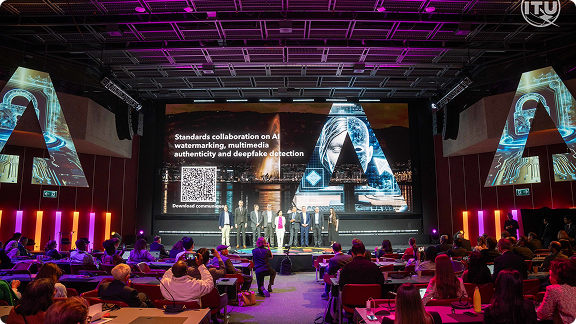
By attaching this cryptographic proof to the file, C2PA shifts the burden of verification from the viewer to the source. Instead of guessing whether an image is real, systems can automatically check the manifest. This creates a trusted layer of context for digital media, making it harder for bad actors to spread misinformation using doctored or synthetic content.
For more details on the technical specifications, refer to the C2PA specification.
Applying invisible watermarks to text
Embedding invisible watermarks into text outputs follows a distinct technical path compared to image or audio media. The goal is to alter token probability distributions slightly so the content remains readable to humans but detectable by specialized classifiers. This process ensures that AI-generated text carries machine-readable provenance data, a requirement now mandated by regulations like the EU AI Act and supported by the C2PA standard.
Major providers are shifting from voluntary disclosures to embedded technical markers. Anthropic, for example, has confirmed that Claude models launching in the EU on or after August 2, 2026, will support machine-readable marking at launch. This approach moves beyond visible disclaimers, embedding subtle signals directly into the text string during generation.
Begin by setting the generation parameters to include provenance metadata. When using APIs or enterprise models, ensure the request payload explicitly enables watermarking flags. This step initializes the stochastic process that will subtly shift token selection probabilities without degrading text quality.
Run the text generation pipeline with the watermarking module active. The model will inject invisible markers by slightly adjusting the likelihood of specific tokens. These adjustments are statistically undetectable to human readers but create a unique fingerprint that can be extracted later by verification tools compliant with C2PA specifications.
Once the text is generated, use a verification tool to scan the output. The tool analyzes the token sequence to detect the statistical anomalies introduced during generation. A successful verification confirms the presence of the invisible watermark and attributes the content to the specific model and generation parameters used.
Implementing this workflow requires careful attention to tokenization methods. Since watermarks rely on token-level probability shifts, the verification tool must use the same tokenizer as the generating model to accurately detect the signals. Mismatched tokenizers can lead to false negatives, where valid watermarks are missed during verification.
Frequently asked: what to check next
Verifying content authenticity
AI Watermarking Standards works best as a clear sequence: define the constraint, compare the realistic options, test the tradeoff, and choose the path with the fewest hidden costs. That order keeps the advice usable instead of decorative. After each step, pause long enough to check whether the recommendation still fits the reader's actual situation. If it depends on perfect timing, unusual access, or a best-case budget, include a simpler fallback.
No comments yet. Be the first to share your thoughts!