AI watermarking 2026: The invisible reality
In 2026, the conversation around AI watermarking has shifted from technical possibility to regulatory necessity. Unlike the visible stamps of the past, modern "invisible" watermarks are embedded as subtle statistical patterns within the text itself. These patterns allow platforms to quickly identify AI-generated material, making it easier to flag potentially harmful or inappropriate content before it spreads (Resemble, 2026).
However, the robustness of these signals is under constant pressure. Experts note that text AI watermarks remain trivial to remove through simple paraphrasing or rewriting tools. This fragility creates a high-stakes environment for publishers and platforms relying on detection for compliance. The technology is not a perfect shield; it is a signal that requires context and verification.
The urgency of this issue is driven by upcoming regulations. The European Union AI Act will begin to be enforceable in August 2026, marking a significant milestone for transparency. As legal frameworks tighten, the ability to distinguish human from machine-generated text becomes less of a technical curiosity and more of a compliance requirement. Organizations must understand that while watermarks exist, their persistence is not guaranteed.
Tradeoffs in AI watermarking 2026
As the European Union AI Act begins to apply to Article 50 on August 2, 2026, organizations must choose between detectability and resilience. Invisible watermarks are no longer just a technical experiment; they are becoming a compliance requirement for many high-risk applications. However, the technology remains imperfect. Research indicates that text-based watermarks are trivial to remove through simple paraphrasing, while image-based watermarks offer higher persistence but introduce different risks.
The choice of watermarking strategy depends on your primary goal: legal compliance, brand protection, or content integrity. Below is a comparison of the three dominant approaches currently in use.
| Method | Detection Ease | Removal Difficulty | Best For |
|---|---|---|---|
| Text-based (C2PA) | High | Low | Compliance reporting |
| Image-based (Pixel) | Medium | High | Brand protection |
| Metadata-based | Low | Medium | Internal provenance |
Compliance vs. Obfuscation
If your primary concern is meeting the EU AI Act’s transparency requirements, text-based watermarks like C2PA are the standard. They are easy for detectors to verify, which satisfies regulatory audits. However, this ease of detection is also their weakness. A user can rewrite a paragraph or change sentence structure, and the watermark often disappears entirely. This makes text watermarks poor for preventing misuse but excellent for proving origin after the fact.
Persistence vs. Quality
Image-based watermarks, such as those embedded by Google’s Imagen models, operate at the pixel level. These are significantly harder to remove because altering the visual data enough to strip the watermark usually degrades the image quality. For marketing assets or creative work, this offers better protection against unauthorized use. The tradeoff is that these watermarks are not easily readable by humans and require specialized software to verify, limiting their utility for quick compliance checks.
Provenance vs. Visibility
Metadata-based watermarks store information in the file header. They are invisible and do not affect content quality. However, they are easily stripped when files are uploaded to social media or converted between formats. These are best used for internal workflows where you control the entire pipeline, rather than for public-facing content where the file format may change.
Timeline of Key Regulations
When selecting a watermarking strategy, prioritize the risk you face. If you are liable for non-compliance, choose the most detectable method. If you are protecting intellectual property, choose the most persistent one. Most organizations will eventually need a hybrid approach that satisfies both needs.
Choose the next step
The 2026 landscape for invisible watermarks is defined by a clear tradeoff: detection capability versus robustness. As the European Union AI Act enforcement approaches in August 2026, platforms and creators must decide whether to prioritize immediate flagging accuracy or long-term content survival.
Most current invisible watermarking techniques remain vulnerable to trivial removal methods. Research indicates that standard text transformations—such as synonym replacement, sentence reordering, or minor stylistic edits—can strip watermarks without degrading readability. This fragility means that "invisible" watermarks often fail as a reliable legal or compliance shield, functioning instead as a weak deterrent.
For most organizations, the practical decision is not to rely on invisible watermarks for proof of origin. Instead, they should serve as a first-pass filter for high-volume content moderation. If your use case requires verifiable attribution or compliance with upcoming EU regulations, visible or cryptographic watermarking methods offer stronger guarantees, even if they are more easily detected and removed by sophisticated actors.
Determine if your jurisdiction falls under the EU AI Act or similar regulations. If you are processing high-risk AI outputs, invisible watermarks are insufficient for legal proof. Use visible or cryptographic methods that are harder to remove without destroying the content itself.

Test your watermarking tool against standard editing workflows. If simple synonym swaps or paragraph reordering strip the signal, the watermark is not robust enough for secure attribution. Prioritize tools that embed signals in semantic structure rather than superficial token patterns.
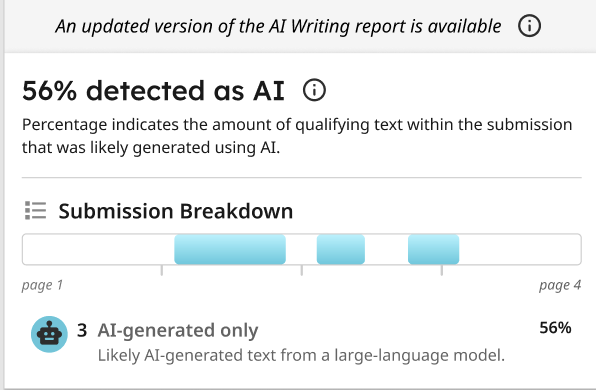
Do not rely on a single method. Combine invisible watermarking with metadata verification and behavioral analysis. This layered approach catches content that has had its invisible watermark removed while still providing a baseline for automated moderation pipelines.
-
Confirm if EU AI Act enforcement applies to your content type
-
Test watermark removal via standard text editing tools
-
Verify detection accuracy on edited vs. raw text
-
Document watermarking method for compliance records
Spotting Weak Options and Misleading Claims
As the August 2026 enforcement deadline for the European Union AI Act approaches, the market is flooded with solutions that overpromise and underdeliver. Many vendors claim their invisible watermarks are permanent, but technical audits show these signals are trivial to strip through simple paraphrasing or translation. These weak options create a false sense of security for platforms relying on detection for compliance.
The primary keyword cluster—AI detection updates—highlights a critical tradeoff: robustness versus transparency. Current standards for AI watermarking prioritize detectability over persistence, meaning the watermarks are designed to be flagged, not hidden. When a vendor promises "invisible" and "indestructible" watermarks simultaneously, they are often misrepresenting the technology’s capabilities. This confusion is dangerous for legal teams assessing liability.
To navigate this, focus on concrete checks rather than marketing claims. Verify if the solution supports the latest ISO and NIST benchmarks for generative AI content. Avoid tools that do not publish their false-positive rates or rely on outdated training data. The goal is not to find a perfect shield, but to identify solutions that accurately label content without breaking under minor edits.
No comments yet. Be the first to share your thoughts!